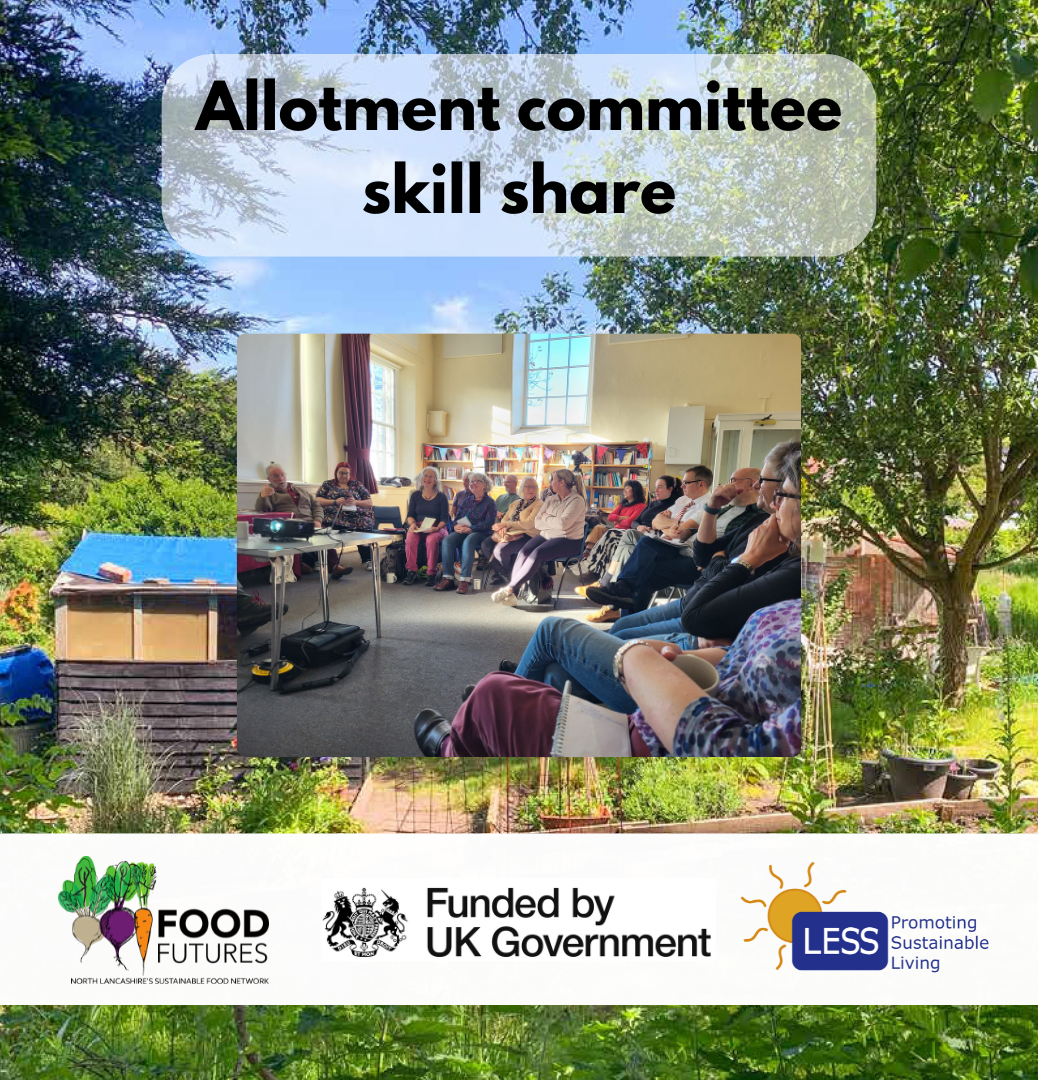
Deborah Simmonds invites allotment holders across Lancaster District to join the upcoming skill share on allotment committees.
Are you or have you been on an allotment committee? Have you ever thought of getting more involved in your allotment or joining your site’s committee? Are you unsure of what allotment committees do? Are you Interested in sharing your experiences, ideas, and creative solutions around allotment committees and approaches to getting more people involved? Or do you want to hear about what other sites are doing and how they are getting on?
If you answered yes to any of these questions, come along to the Allotment Committee Skill Share on Saturday 8 March from 10:00 – 14:00 to hear from others and/or share your skills, ideas, and experience. The event will be held at the Quaker Meeting House in Lancaster, LA1 1TX. This is a free event for allotment holders with refreshments and a light lunch provided, so please book by 5th March for catering numbers.
This facilitated skill share session will pool contributions from attendees and will discuss ways to strengthen the overall functioning of allotment committees, whilst sharing creative ideas for encouraging participation on allotment committees. It will cover a range of subjects, including allotment committee structures, member’s roles, involvement, communication, good practice, and some of the challenges around committees.
To book your place visit: foodfutures.org.uk/events/allotment-committees-skill-share-session/ and click the green ‘book now’ button.
Why is this event happening?
“Running allotment committees well” is one of the training needs identified in the Lancaster District Allotment Review Report, which was published in June 2024.
This independent review and report looked at allotments across the district; from how many there are (24), how big they are (from 10 plots to 120+), who owns the land (City Council, Town and Parish Council, Church owned and private), rental charges, waiting lists, finances and facilities to biodiversity on allotment sites, processes and decision-making, training needs and visions for the future (amongst other things).
The full report, with recommendations and ideas for supporting and developing allotments, is available online, on the FoodFutures website under “publications” and “case studies”: https://foodfutures.org.uk/case-studies/lancs-allotment-review/
A paper reference copy is also available in all libraries across Lancaster District, as well as most allotment sites having their own copy.
Have a read of the report, or just dip into your areas of interest. It is there to be used and full of useful information and ideas.