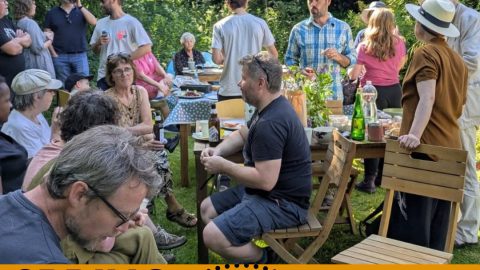
Ellen Pearce, the Plot and FarmStart Coordinator, explains the Community Supported Agriculture model and its integral role in our local food economy, for both food production and rebuilding relationships.
Where does your food come from?
We know that many people reflect on this question and would be interested in connecting more closely with local farmers and growers to rekindle what would once have been a crucial relationship.
In times gone by, getting the harvest in and feeding the community would have been a shared endeavour – a coming together of villages, neighbours and community.
In February a report was published by the National Preparedness Committee into UK civil food resilience which addresses ‘the capacity of people in their daily lives to be more aware of risks to food, more skilled in reducing unnecessary risks, and more prepared to act with others to ensure all society is well fed in and after crises.’
The report highlights some of the challenges with the current system as well as the fact that many in our society already face deep inequalities and food insecurity. In particular, the report explores community responses to ensuring access to food in times of crisis.
As well as community food growing projects and orchards, garden-sharing and allotments, other ideas for access to local food include Community Supported Agriculture (CSA). This is a model which aims to bridge the gap between farmers and ‘customers’, building community, connection and relationship. You can find a map of Community Supported Agriculture farms on the UK CSA network website: communitysupportedagriculture.org.uk/find-a-csa/.
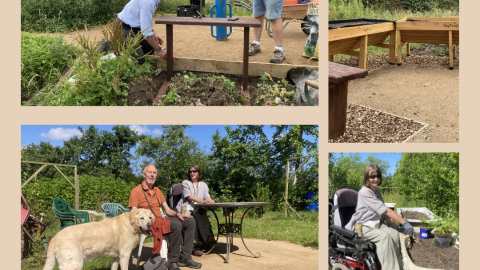
Here in North Lancashire, the Plot runs on our local Community Supported Agriculture model. It’s a small market garden growing fruit, veg and herbs on approximately an acre of certified organic land and two polytunnels. The Plot operates a crop-share scheme which is a form of Community Supported Agriculture, whereby members support the Plot for a whole season and in return get a share of the produce grown on the farm each week for the most productive 20 weeks of the growing season.
This model supports small-scale producers as it means that the season can be well-planned and the veg is grown knowing that there is a market for it. It also helps to share the risk between the grower and the producer as the grower can flex the share of the crops each week based on the successes (and challenges!) on the farm. As climate breakdown makes weather patterns more unpredictable this is especially helpful as while some crops may unexpectedly fail, others often thrive.
As well as sharing the produce, crop-sharers get weekly updates about the real experiences in the field – whether it’s the abundance of slugs, the impact of a storm, or the success of the broad beans (to name a few from last season!). They also get their shares delivered by Gather, the new food hub which sees a collaboration of local producers coming together to share logistics and marketing infrastructure.
Coming back to the idea of preparedness, food security and re-forging connections between local residents and local food producers the CSA model can be helpful.
To join the Plot’s crop-share scheme this season see www.the-plot.uk and/or join a tour of the farm and workday on 26 April as part of the FoodFutures Spring into Action week book HERE.
The crop-share runs for 20 weeks from June-October.