Ellen Pearce explores how we might work better together through closer collaboration…
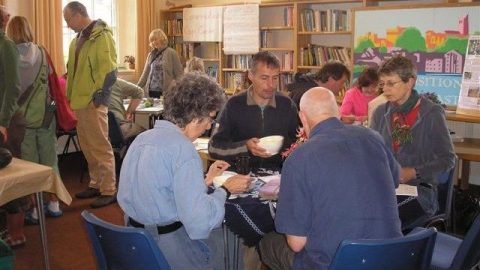
In April, over 25 local change-maker organisations came together to explore how we might work better together and what might be possible if we did.
It was an inspiring day at Land and Sea in Cockerham, just by the salt marshes in the glorious sunshine.
We came together to talk about the idea of a regenerative economy – what could this look like, how is it different from our existing economic structures, and what might be possible if we worked together on a shared vision?

Modern economics tends to put financial profit at its heart – and this is the driving force that shapes decisions and actions, often leading to extractive models which use resources beyond their ability to replenish.
Regenerative work, in contrast, puts LIFE at the centre of decision making. It considers that sustaining the current order is not enough – we need to actively make things better instead.
So organisations that focus on regeneration build healthy soils, create nutrient dense food and use deep governance to embed care and connections shaped by local communities.
As a group of organisations with missions relating to many aspects of local life – eg the food system, housing, energy, well-being and the arts – it is clear that no one part of this system can thrive without the other elements also being in a healthy state.
For example, if there is no affordable housing or energy, ensuring people are well-fed is much harder.
By working together and acknowledging the challenges we were all facing, we were also able to identify some potential solutions to explore.
Almost every organisation at the workshop faces resourcing, financial or funding challenges and this is to be the theme of our next network meeting in October.
How can we creatively explore regenerative finance to support regenerative work? Could we consider alternative financing mechanisms that are not also part of the extractive capitalist culture?
And how can we better understand and map local resources to identify things to share or trade?
Bio-regional finance work is currently emergent and often based at landscape level – for example, focussed around a river catchment area.
But imagine what might be possible if there were more finance options for place-based collectives which are working on the ground with communities and nature.
Ones that restore biodiversity, produce nature friendly food, offer affordable housing, and provide spaces for connection and wellbeing.
If you represent a local change-maker organisation, you can join the next network meeting on 23 October by booking a place here.