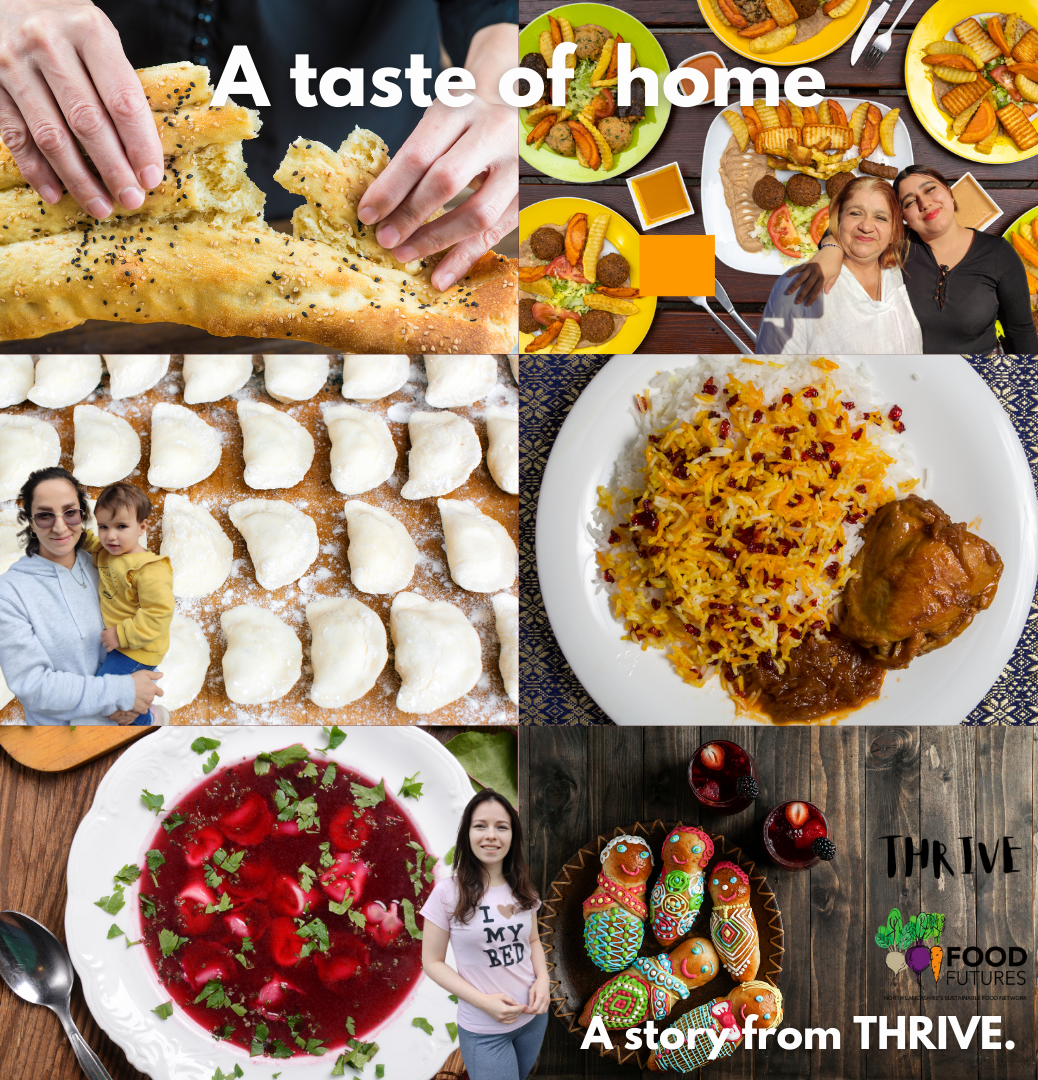
Jim Greenan from FoodFutures’ THRIVE Magazine asked some of Lancaster’s refugee community about the importance of food from the countries they didn’t choose to leave… and how they’ve gotten used to British food.
Dora and Daniela (Ecuador)
It’s really important for us to preserve the Indigenous culture in Ecuador. Every dish has a history. For example, on the Day of the Dead we make colada morada – that’s a drink made of berries and purple maize with cinnamon and cloves. It represents the blood of the dead, and we drink it at the cemetery with sweet breadmen, which represent the body.
Ecuador’s most famous dish, especially by the coast, is probably ceviche, made of marinated prawns and fish. Thinking about it makes me nostalgic. And when I see plantain and cassava, I remember my origins, but they’re expensive here.
British food is similar to Ecuador except for breakfast – we have plantain patties with eggs, cheese, and coffee. I like the food here – I respect everyone’s food and like to learn. In Ecuador parents like to give children natural foods to help them grow – not so much fast food.
Ivanka (Ukraine)
Like a lot of Ukrainians, my favourite dish is borscht and I also miss varenike – dumplings with fillings. But I don’t eat these often because it’s too noisy to cook when I get home from work because my housemates are asleep. I eat a lot of fish or fish cakes here because they’re quick to make. But you can’t get carp anywhere!
Food is different here. Meat, for example, is more fatty and tastier in Ukraine. I really like chips with salt and vinegar – strange but very nice! Gravy surprised me; it smells nice but I don’t like the consistency.
In Ukraine me and my husband grew a lot of our own vegetables on a plot next to our house. When I find a place to buy food from my country it helps me feel at home. I couldn’t find cottage cheese at first, or condensed milk to make milk cake. Little things like that make me happy. I’d never had cottage cheese with chives before – wow!
Somayeh (Iran)
In Iran we eat a lot of spicy food, and we eat rice every day, often with stew, or with chicken or kebabs, but not pork. Not many people in Iran are vegetarian.
I really miss Iranian food – it’s important to me. The food I miss most is ghormehsabzi, which is a kind of stew. I can’t find the herbs in it here, but I brought a lot back from Iran. You can get it in a can in the halal shop in Lancaster.
My son doesn’t like Iranian food – he likes chicken nuggets! I give him zereshk – that’s rice with berries and chicken, delicious – and he doesn’t like it!
It’s hard to get used to the food here – the bread is not like Iranian barbari flatbread for example. But I like curry! My British friends eat a lot of ready food, but in Iran most women cook every day. Here a lot of people go to restaurants – we don’t eat out often.
“Love travels via the stomach”
Dorothea Williamson has witnessed how food from home can help.
It was difficult for men to be in hotels having to eat unfamiliar foods; in a house they can cook their own food and eat together. Food affects how you feel about life. It’s hard for a hotel to cater for everybody; some cultures like food spicy and others bland, and if you’re used to rice every day it’s hard to be served a lot of pasta.
Food is like home – we have an expression in German: “Love travels via the stomach” – so it’s important to be fed what you like. Food banks often have a lot of tinned or packet food like potato flakes, which are completely unfamiliar to people from countries where cooking is a ritual. Often men have to learn when they come here because they have no choice. It’s like a magnet – when someone cooks, often dozens turn up.
The other aspect is community. For example, Ramadan is a huge thing for Sudanese; when you break the fast, community happens between families and neighbours; people open their houses and put food out. People get really homesick during Ramadan.
The social side is important – people like to get together at Claver Hill to grow food, but also to chat and practise their English. The place is sometimes buzzing in the summer – it’s all very good for mental health.
Dorothea Williamson has many years’ experience helping new arrivals in Lancaster settle in.
The thirteenth edition of THRIVE North Lancashire launched at the Seasonal Market in December 2024. You can read it online here.
If you can, donate to help support THRIVE stay a free community magazine!