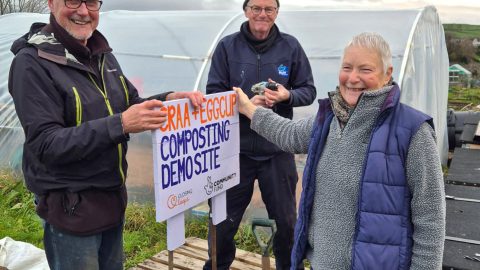
A group of Garden Organic Master Composters recently visited Lancaster for a tour of local community composting demonstration sites. Master Composters are volunteers who are recruited, trained and supported by Garden Organic to help raise awareness of the benefits of composting and encourage people to compost at home.
They went on a walking tour starting at Scotch Quarry, visiting Claver Hill and ending at The Storey. At all three sites, they met community members who are active in managing vibrant community composting demonstration sites.
On their recent visit, they undertook a walking tour from Scotch Quarry to Claver Hill and ending at The Storey. All three sites have had active local communities building community composting schemes, with support from the Closing Loops project.
Here is what the Garden Organic Master Composters from Cumbria wrote about the day:
As a development opportunity and social occasion, all Cumbria Master Composters were invited to attend a walking tour of some of the more established community composting sites in Lancaster that have been set up by the Closing Loops project. Eight Master Composters took up the opportunity. Alongside Senior Project Coordinator Frankie, they embarked on the tour led by Closing Loops Community Composting Coordinator Diana McIntyre.
Scotch Quarry Urban Park
The first site we visited on this sunny June day was Scotch Quarry Urban Park. Like all the community composting initiatives under the umbrella of Closing Loops, it is run in partnership with another group or project – in this case an established community garden group within the park.
Diana gave a brief overview of the scheme and compost monitors Sue, Sara and Kathy explained how the system works on a week-to-week basis. The scheme currently has about 34 members, all of whom are residents in the adjacent streets. Most houses here have small back yards and limited room for a compost bin.
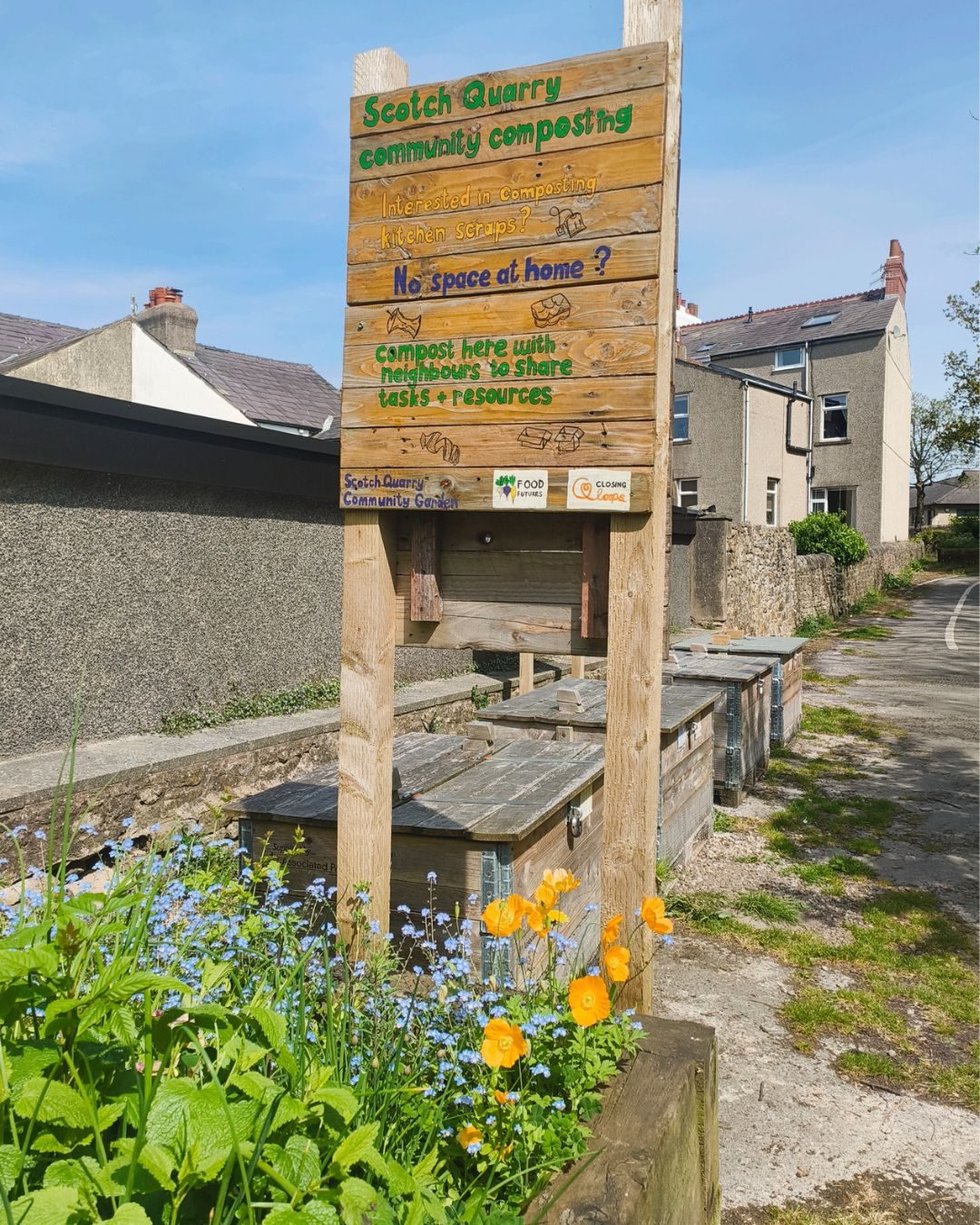
The project began almost two years ago with a consultation with local residents to gauge interest and secure involvement. Membership is free and each member is given an induction and a caddy before they can deposit compostable food waste in the compost bin. The four compost bins are made of wood but have a rat-resistant mesh. Only raw fruit and veg scraps are accepted alongside carboard to add the carbon balance to the mix.
The compost bin in use has a coded padlock that members have access to. The other bins that are resting are locked and only accessible to the volunteers who monitor and turn the compost periodically. Once a bin is full, the volunteers continue to turn and allow the compost to mature. When the compost is ready, members are invited to take away some away to use and any left-over is used by the community garden project.
Claver Hill Community Farm
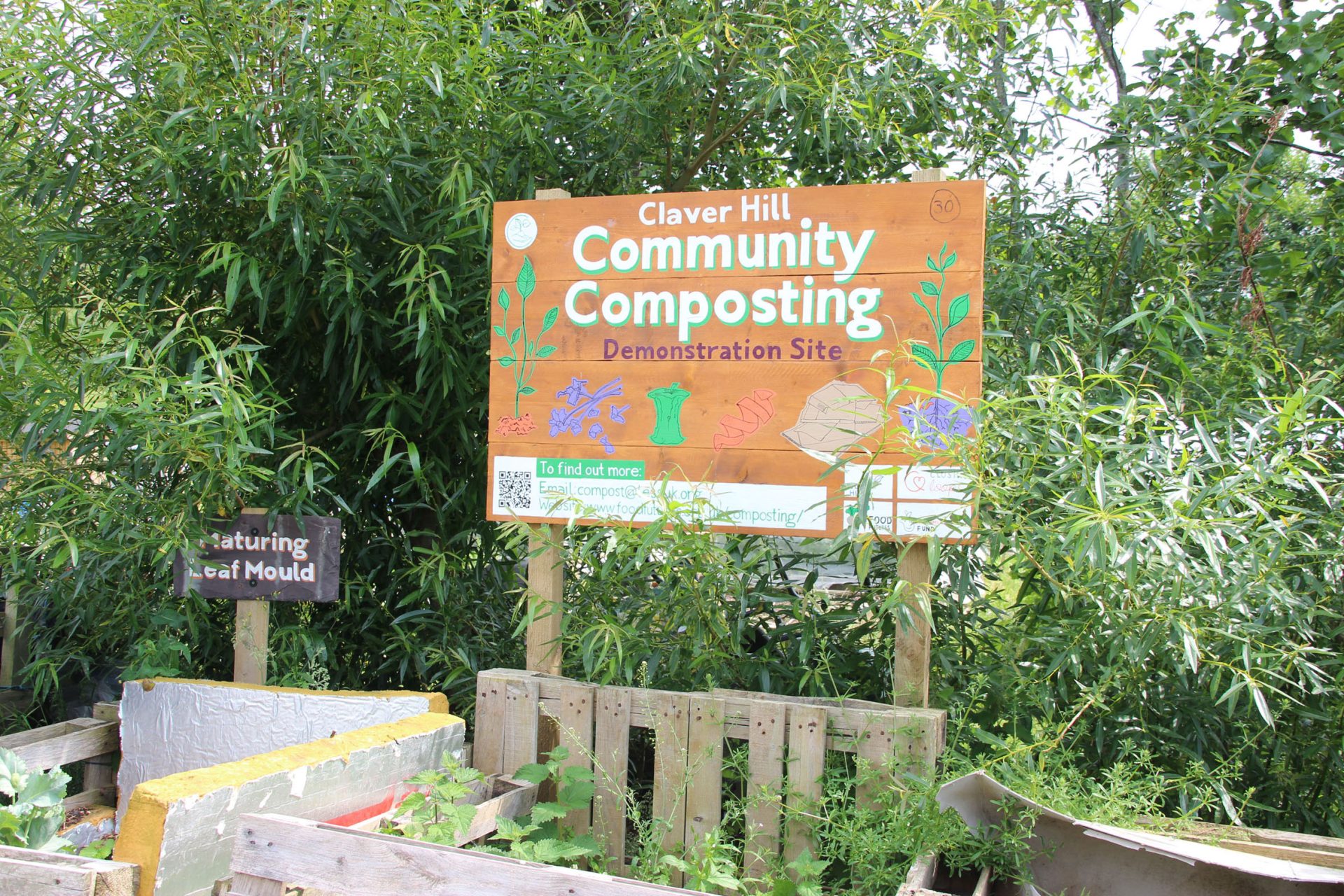
The second demonstration site visited was Claver Hill Community Farm. This community growing project, located on six acres of land on the edge of Lancaster and hosts several different horticultural and nature-based initiatives. Claver joined the group of community composting sites around Lancaster led by Closing Loops after already having done a significant amount of composting for years. Local visitors to the site are invited to contribute their kitchen veg scraps and garden clippings to compost and then share the compost when the process is complete.
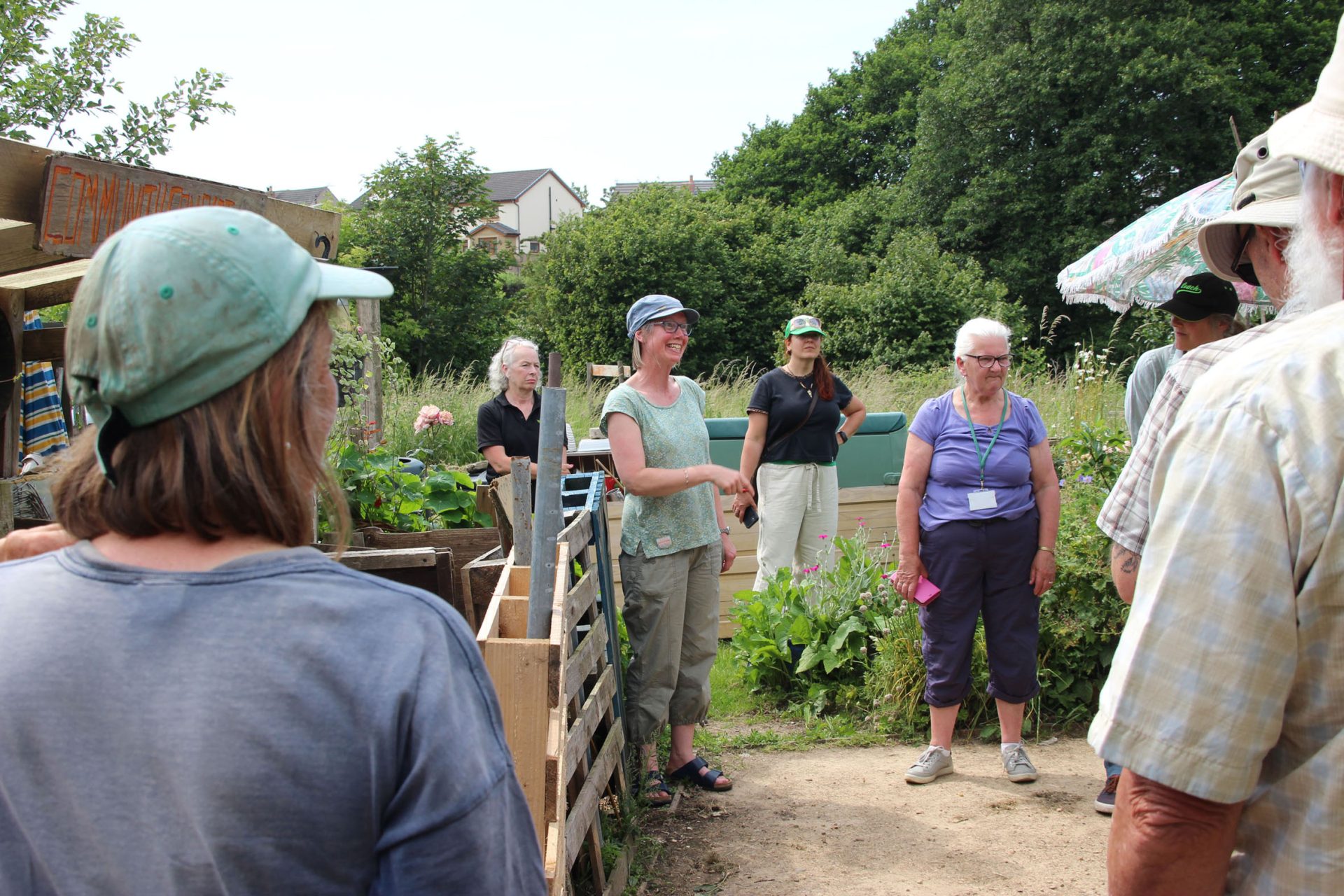
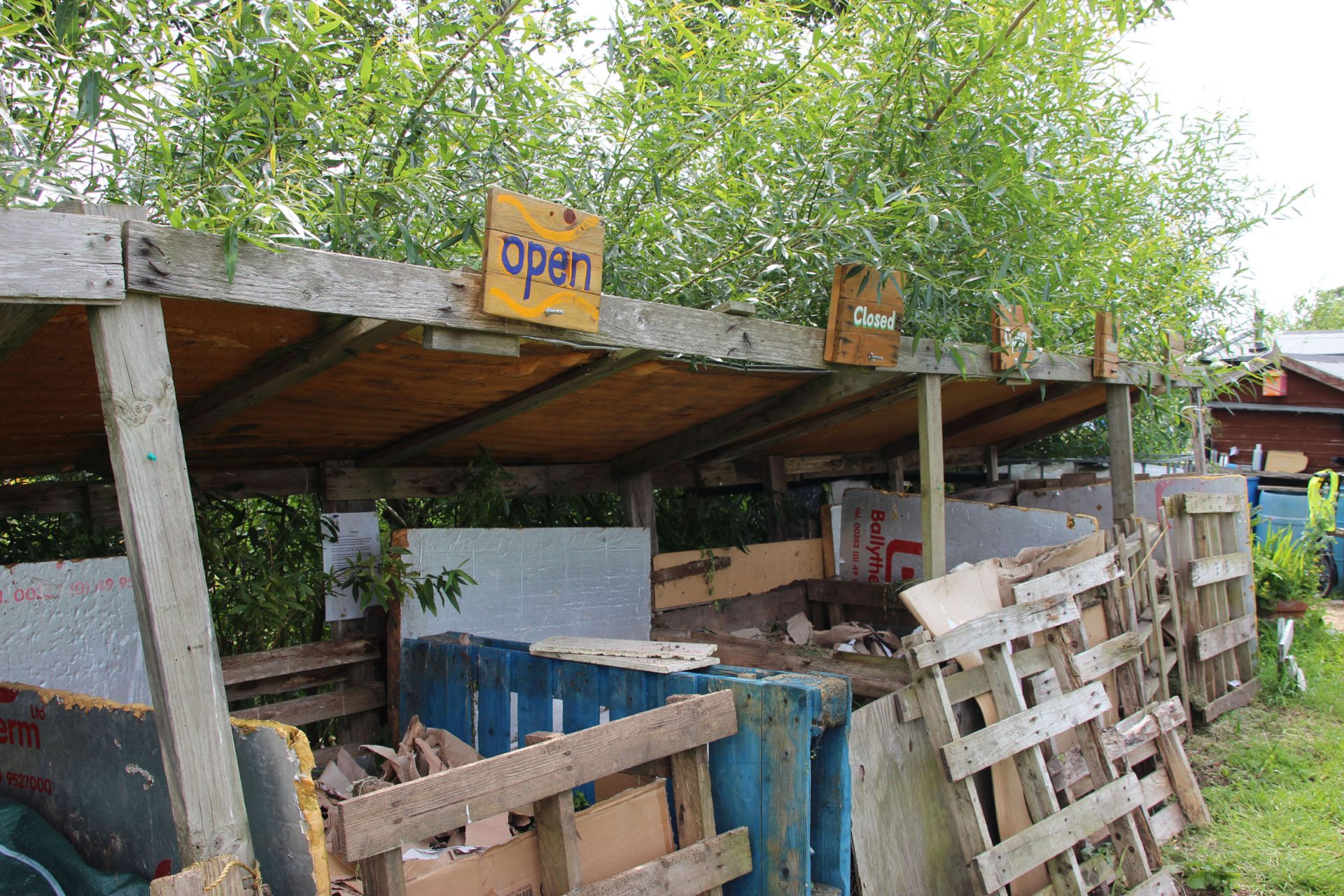
Workshops are often held at the site to explore new ideas and methods on composting. The Community Compost Corner was the main area where community members donate their organic waste, with a wooden rat-resistant compost bin near the gate for easy access for those using the footpath and Claver Hill members Chrissy and Jane discussed how the project had come about and how the community composting works. There is also a compost demonstration area with various compost bins and systems in use, including a Joraform Tumbler and a Johnson-Su. Claver Hill member and expert composter Kathy discussed how these systems work with the visiting Master Composters.

The Storey Gardens
The final site visited on our tour was in The Storey Gardens, which is owned by Lancaster City Council. It is the most recent addition to the list of now nine composting demo sites supported by the Closing Loops project.
The Storey Gardens are the grounds of The Storey building, which is home to offices and arts spaces, a performing arts venue and a café. As a result of the new legislation for businesses on food waste separation, Diana and the Closing Loops composting project have been working with the city council to install a Ridan composter in the Storey Gardens to compost the food waste generated at The Printroom Café and Bar within The Storey building. This has only been up and running a few weeks and Diana has begun training and induction on using the Ridan effectively with some of the Storey staff. This is still ongoing, but the infrastructure and procedures are all in place.
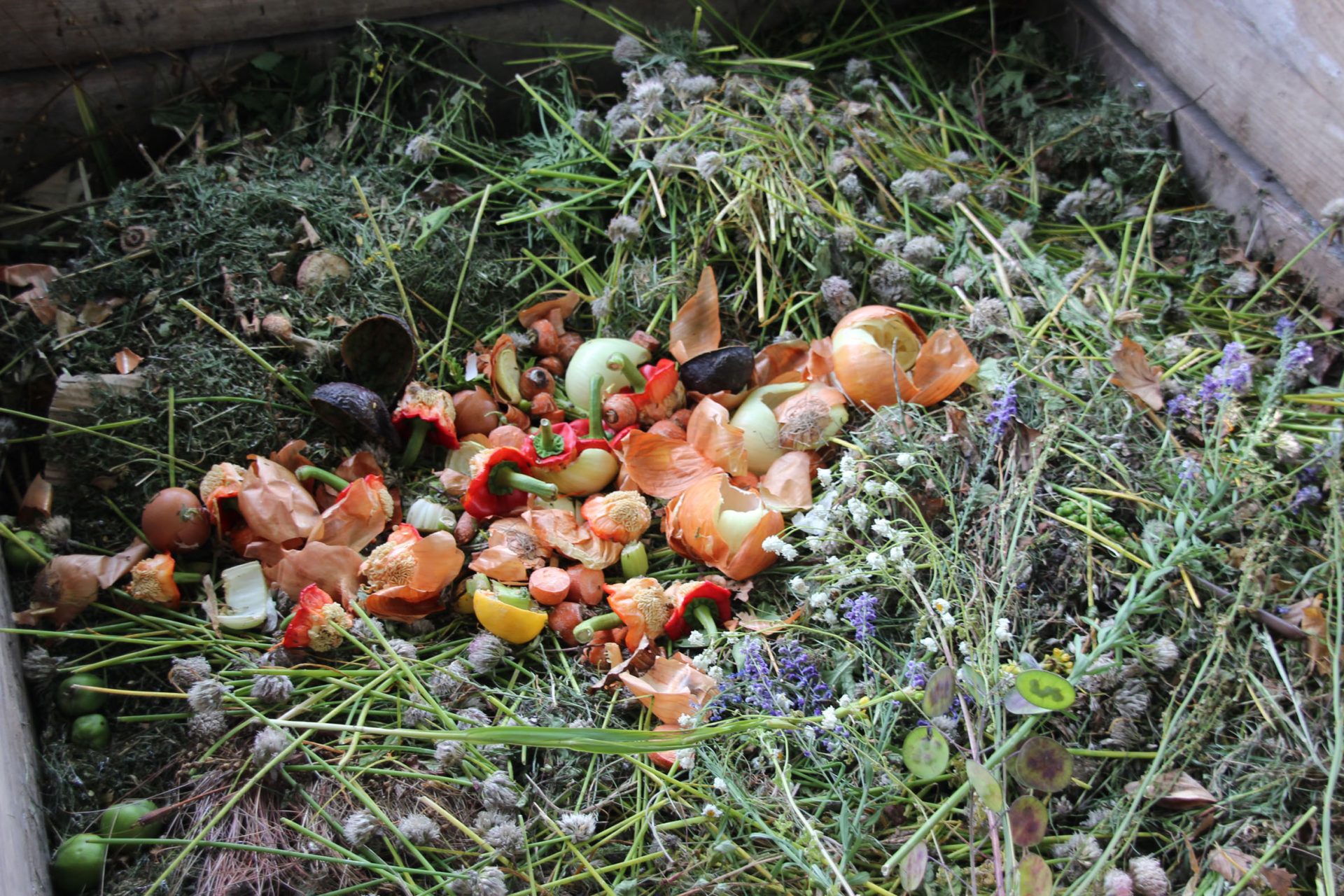
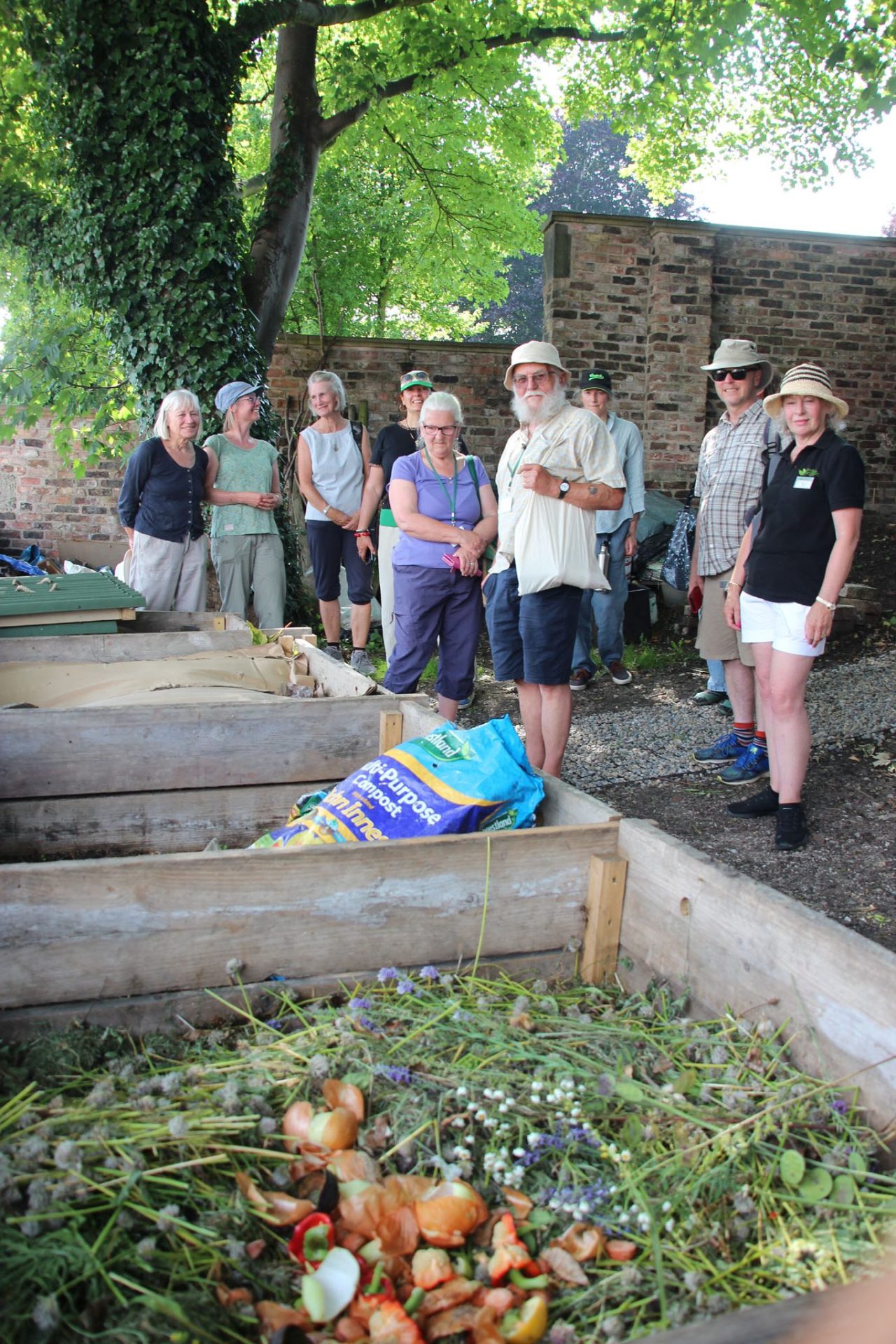
While the Storey Gardens volunteers have been making high quality, living compost for years in composting bays, the new Ridan composter allows for cooked food waste from the cafe to be processed safely, without attracting rodents or causing problems with unpleasant smells.
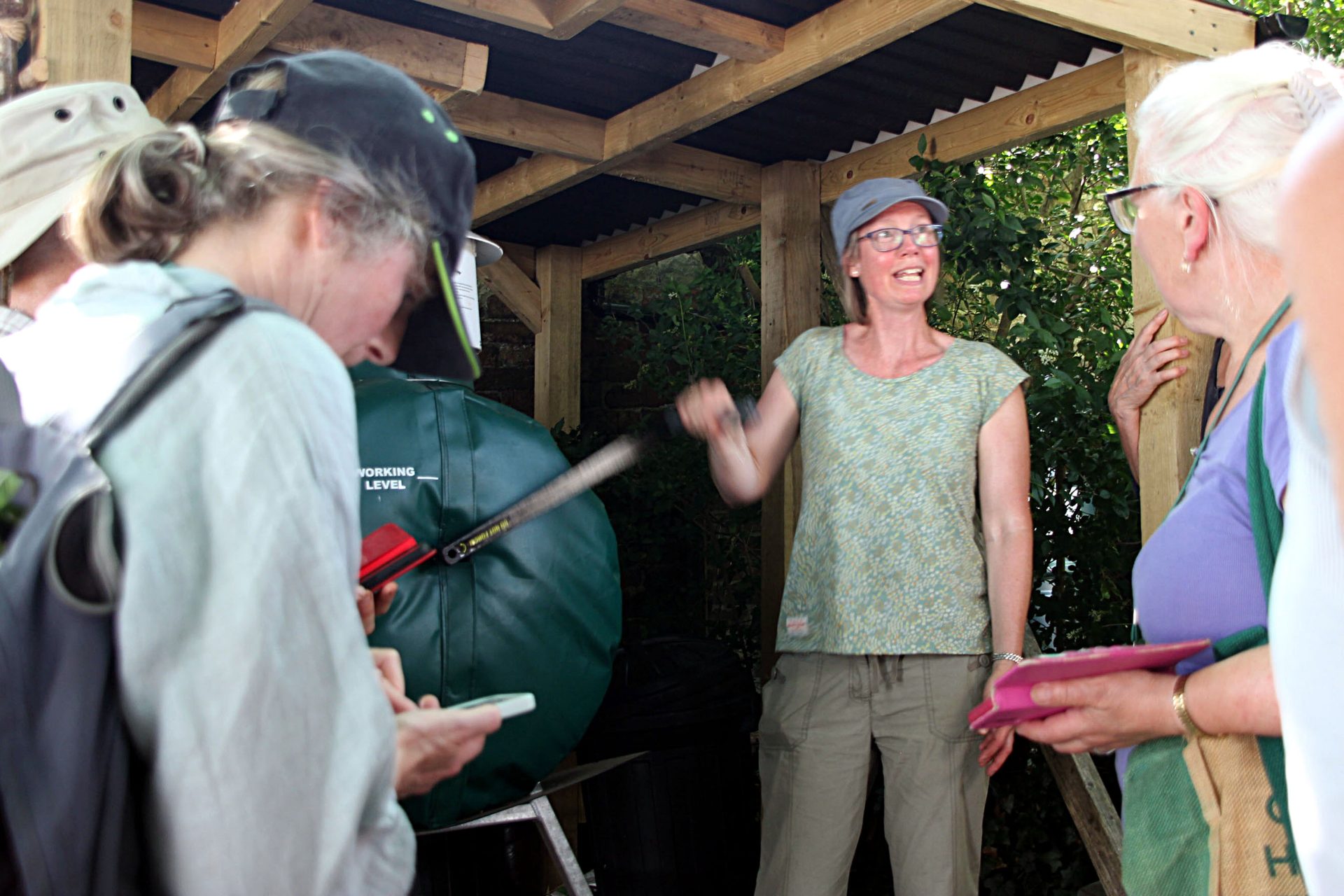
Diana demonstrated how food waste is added to the Ridan with saw dust and wood chip and turned periodically depending on how much is added. Once it has been through the composting system, the resulting partially composted material is transferred to the maturing bays. There are also bays in the same area for composting garden waste generated in the garden.
In addition to several composting bays, a Ridan compost tumbler arrived a few weeks ago and has been inaugurated and received its first food waste consignments.
Although it was a hot afternoon with a lot of walking involved, the Cumbria Master Composters were delighted with their tour of these three very different, but all equally successful and thought-provoking community composting initiatives and hopefully gained some inspiration for potential projects on a similar theme within their local communities in Cumbria.