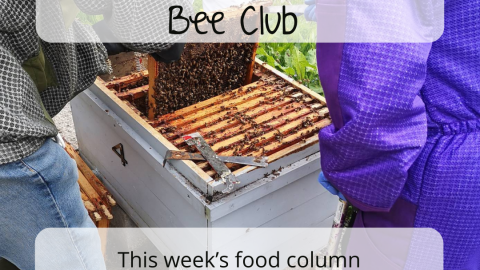
Cork Road allotments and Eggcup have teamed up on a new circular composting project. Eight new composting boxes at Cork Road allotments are composting some of the fruit and veg waste generated at Eggcup, this compost will be used to grow produce on the allotments, and some surplus produce from Cork Road is being distributed through Eggcup.
While Eggcup avoids waste wherever possible, sometimes fruit and veg is no longer suitable for consumption. Composting is then a great way to transform it into something useful.
It is already a huge success. A small compost crew of allotment plot holders with support from Diana the Closing Loops composting coordinator have built and assembled the rat resistant boxes from local preloved pallets and collars. Quick and effective ways to chop the fruit and veg are being employed by the compost crew. Waste cardboard from Eggcup is also being added to the compost along with trialing the addition of biochar from Coppice Coop and mushroom blocks from Wyreside Mushrooms.


Air chimneys have been included in the box design to reduce the chances of anaerobic breakdown. A compost aerator made by local blacksmith Ruby Furgerson helps to keep the mix aerated. Staff and volunteers at Eggcup are collecting and bokashi-ing (fermenting) the fruit and veg waste and have logistics in place to move compostables and surplus.
This is a wonderful example of local circularity – waste streams from three different local organisations being made into living compost full of nutrients and microbes to grow nutrient dense food. Along with the input of ‘waste’ materials, the time, energy, skills and lots of laughter from the compost crew, Eggcup staff and volunteers are essential for this loop to work effectively. This is further supported by Wyreside Mushrooms and Coppice Coop.


Resources not waste. This model pushes our ideas of what is waste. These materials, bi-products from other processes, create an amazing compost which benefits local biodiversity, soil and plant health and our own health. Why call it waste?
Eggcup volunteers adding bokashi bran to the buckets of fruit and veg waste means it doesn’t rot and smell before getting to the compost boxes. It begins the breaking down of the material and introduces some wonderful microbes to the mix. Diverting this material to Cork Road allotments reduces the financial burden on Eggcup to get it taken away.
The biochar and spent mushroom blocks provide the composting process with the much needed carbon and air pockets to balance the moist, nitrogen rich fruit and veg waste. The mushroom blocks also bring fungal communities valuable to living compost and the biochar has amazing properties to hold onto the nutrients in the compost, stopping them leaching away but allowing plant roots to take them up.


Downpipes which have lots of drill holes are fitted inside the boxes with a layer of biochar at the bottom. Allowing air flow through the mix to keep it aerobic along with using the compost aerator. The biochar at the bottom acts as a sponge to hold the goodness of the compost, and will be combined through the mix before using. The cardboard and mushroom blocks are broken up and added in layers with the chopped up fruit and veg waste. Reducing the size increases the surface area for composting microbes to quickly breakdown the material.
This is one of a growing number of community composting demonstration sites across the district. Cork Road composting crew will be hosting an open morning during Spring into Action on Sunday 26 April 10-11:30am for those who would like to see it in action.
Could your allotments do something similar?
If you’d like to know more about community composting workshops please see foodfutures.org/composting or contact Diana on diana_cl@lessuk.org