In this week’s column Eggcup Trustee Rachel Marshall explores the transition from food aid to food sovereignty in North Lancashire.
“By 2030 we’d like to live in a place where everyone is well fed”.
This was a vision shared by local residents feeding into the development of ‘Our Food Futures’ community food strategy back in 2020.
Halfway through the decade the FoodFutures partnership is taking practical steps to create a more just food system using the ‘food ladders’ approach to guide the work.
This approach was developed by Dr Megan Blake at Sheffield University as a way of thinking about community food provision.
It uses the idea of rungs on a ladder to show how different aspects of food provision are required and how they link together.

Catching (Rung 1): Emergency support for those in crisis; examples include food parcels and vouchers. It is described as activity that is done to or for people.
Capacity building (Rung 2): Supported activity done with people to help build skills, stability and resilience. Examples can include food clubs, community gardening, skills training.
Self organising (Rung 3): Community led activity done by people when they have the capacity and opportunity to meet needs and pursue shared interests. Examples can include community owned growing spaces, local food coops, community led centres.
Megan also highlights that “a ladder is not a ladder without its side supports or rails – it is crucial to build partnerships and links between the different rungs”- such as the Lancaster District Food Justice Partnership and FoodFutures more widely.
FoodFutures working groups have been exploring ideas for how the food ladders approach could be embedded into work happening locally. These include:
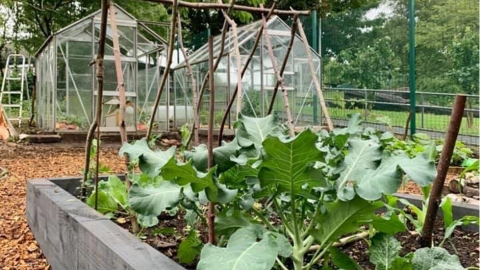
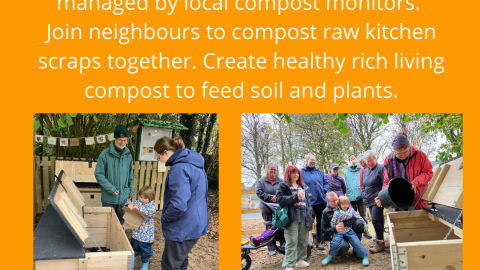
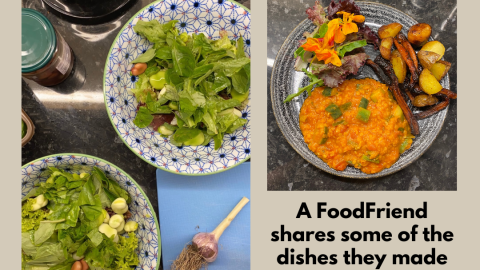
Creating ‘food circles’ between community gardens or allotments, food clubs, community chefs, kitchens, and community compost sites. This idea is around increasing food provision from community gardens into community centres with recipes and cooking support available from a community chef. This idea is already being explored at Marsh Community Centre and at Stanleys Community Centre in Morecambe.
Local producers growing specifically for food clubs – a pilot is already underway with a new growers coop growing directly for Eggcup this year.
The Food Club network operates a buying co-op through Eggcup. Some produce is purchased from the local producers and it enables members to access staples at a low price.
To find out more read the food ladders article in the THRIVE Magazine Summer 2025 issue.