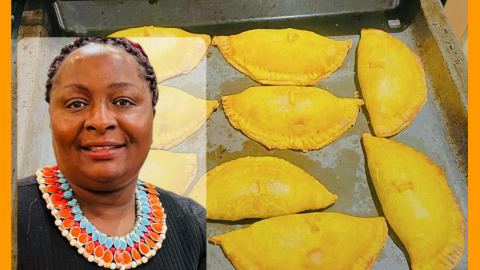
Written by Eggcup volunteer Linda Smalley
I got my first lesson in food inequality from my Home Economics teacher in school. She thought she was merely teaching us to make scones – but the devil is in the detail. If we wanted to glaze our lumpy offerings with the brush dipped in egg we had to give her 1p; for context: This was in 1976 and a Freddo was 2p.
I rummaged around in my bag and paid up, but some of the other children didn’t have 1p and a couple of them started crying. The people with shiny scones got a sticker, the rest did not.
I was very confused. When I got home and told my Mum, she got angry. It turns out that my mum would have been one of the children without the shiny scones or the sticker, and the humiliation had stuck with her.
When I grew up, my mum fed anyone who came through the door. Some of my friends came from Pakistani families where this kind of assertive hospitality was also practised. It was embarrassing sometimes, but we just rolled our eyes and tucked in. The food was always great. Later I would realise it was the radical generosity that past poverty inspires in the resilient. This was Birmingham in the 70’s and 80’s, and times were tough for a lot of people. My mum didn’t love cooking but I think she loved having the resources to buy ingredients.
Cooking was always a survival skill in our family. My grandfather died when my mother was ten and Nana, newly widowed and homeless with two children, found a job as a live-in cook. Cooking wasn’t just about the food on their table; it was about the roof over their head, too.
I did not understand the urgency with which my Nana taught me to cook, but I saw that urgency echoed by the grandmothers of my friends. They too had kept a family together and fed on meagre resources. As a teenager and first generation ‘unworried’ cook, I blithely took these talismans against hunger and ran with them. These skills were passed on as a valued resource though, not a hobby.
By the time I left for uni, I had a suite of recipes from Kashmir, Wales and Pakistan in my head and a stash of spices to tide me over until I found the best shops to buy them. At uni, it was a culture shock for me to meet people who did not cook. In a communal student house I produced dhals that were seen as ‘take-away food’ to be bought on the way back from the pub. I had no idea what they were talking about. My own experience of ‘take-aways’ was a pile of repurposed food tubs lugged home after a visit to a friend’s house. These would be washed and later returned with a cake in a biscuit tin (which your friend would then have to wash and bring back to your house filled with some other delicious food, and so it went on). I knew that people went out for curries – but that was “other people”. We always ate “at home”, even if it was someone else’s house.
As relationships developed at uni, we started cooking together, but it felt odd for me to suddenly be the ‘go-to’ person instead of an apprentice. Gradually I got used to it, and I stopped looking for an experienced adult to check the seasoning. What I did not get used to was the idea that the life skills passed on to me were seen by my peers as a bit of an exotic hobby.
At a time when ultra-processed food makes up well over half of our national diet, badly affecting our health as a result, I feel that we have to take back our basic food skills. Two examples of things that can be expensive when bought but quite easy and affordable to make at home are sauerkraut and sourdough bread.
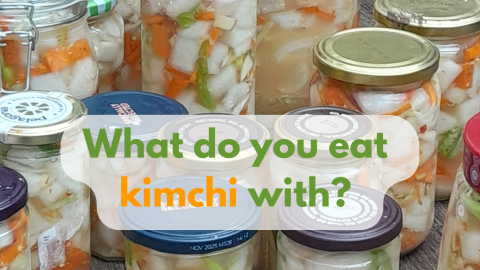
Cabbage and salt are cheap, and if you have ten minutes, a clean jar, scales and a bowl you are good to go making your own sauerkraut. It is easy, time-honoured, see-you-through-the dark-time-of-the-year stuff.
I’ve noticed that bread often reflects financial well-being. People who are struggling to make ends meet tend to buy cheap white bread. But the mass production comes at a cost. Flavour and the beneficial effects of fermentation are exchanged for a long list of additives and more yeast.
Sourdough bread on the other hand is made of only flour, water and salt. It keeps for a long time, tastes incredibly good and, made from fermented whole grains, is a source of food for our friendly gut bacteria. Traditionally the bread of the poor, it needs no yeast and is incredibly cheap to make. It takes time, fuel and some confidence though. And these can be in short supply when you are living in food poverty. The injustice of even decent bread becoming a luxury pains me.
Volunteering at Eggcup has shown me how food clubs improve access to fresh fruit and vegetables. There is no excuse for food and fuel poverty in a wealthy country like ours – but here we are. Feeding each other is as radical as it gets in this climate. My old Home Economics teacher might not have agreed.
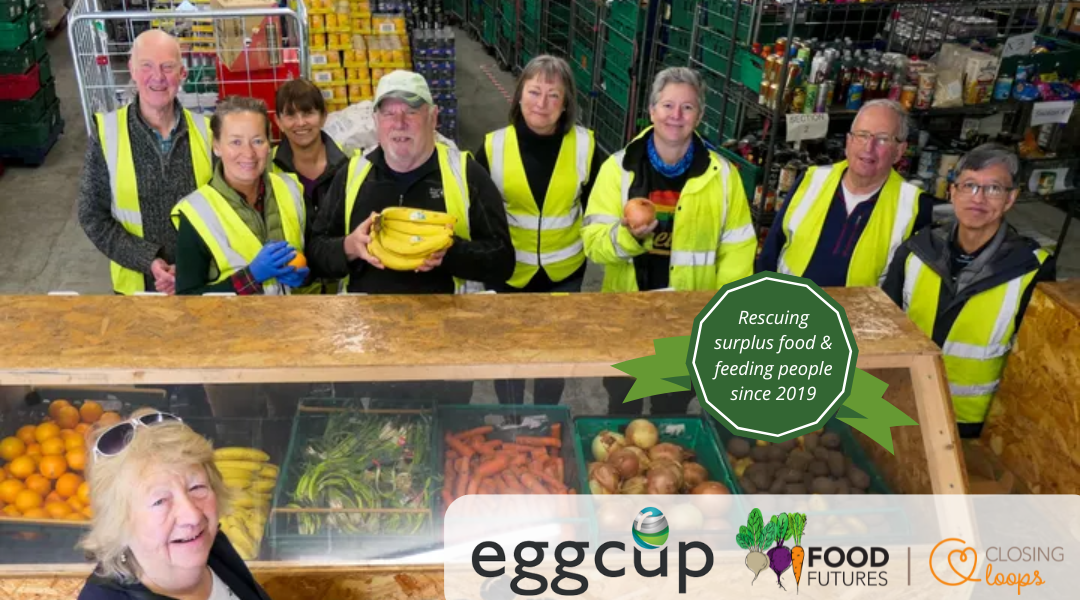
Eggcup is currently running a crowdfunding campaign to ensure it can keep running its services, saving surplus food and supporting people to access good food.