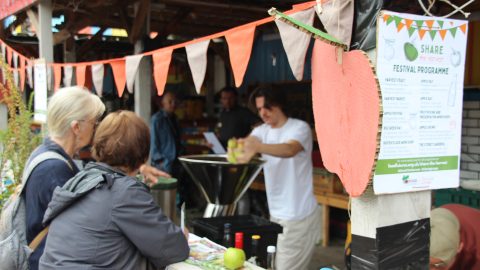
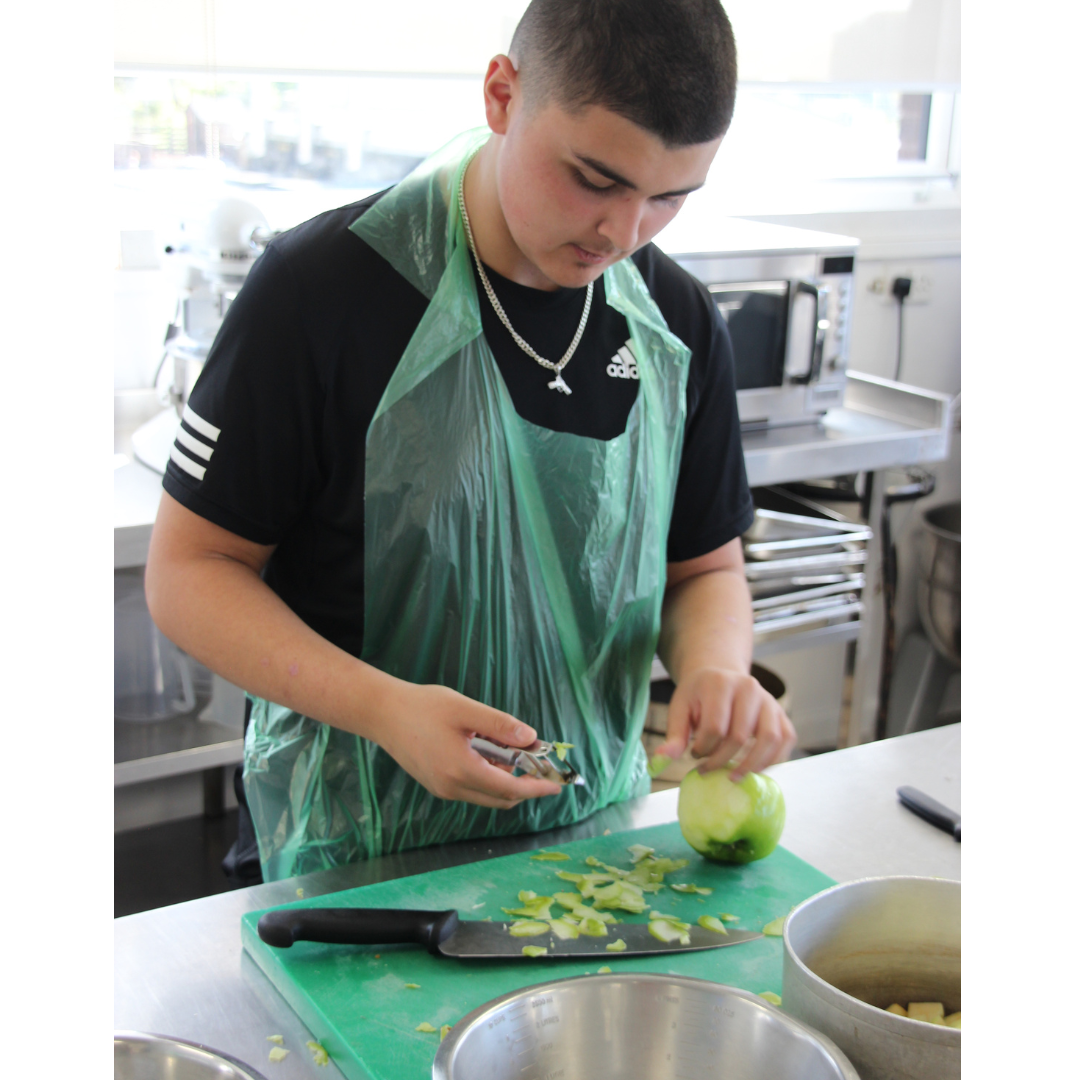
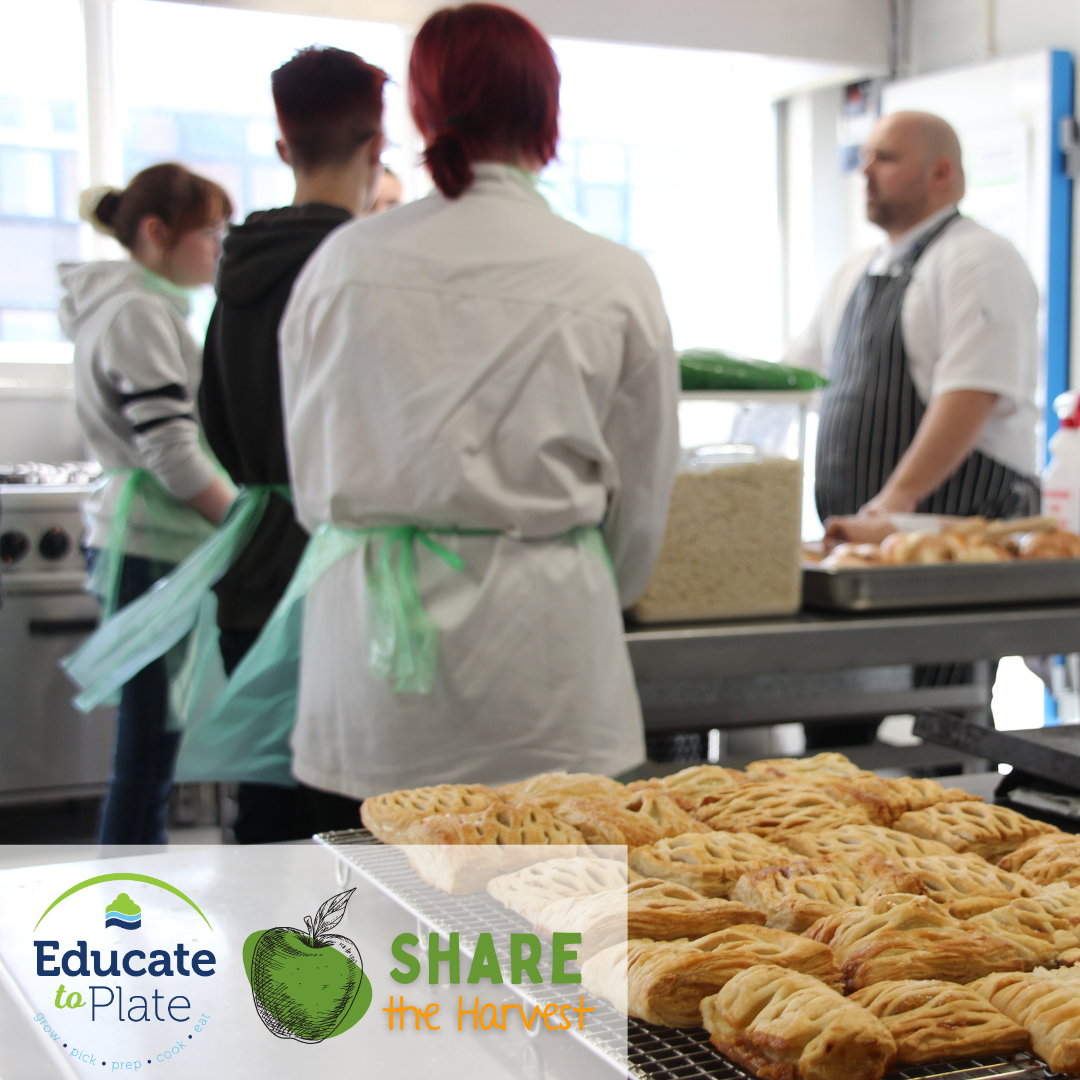
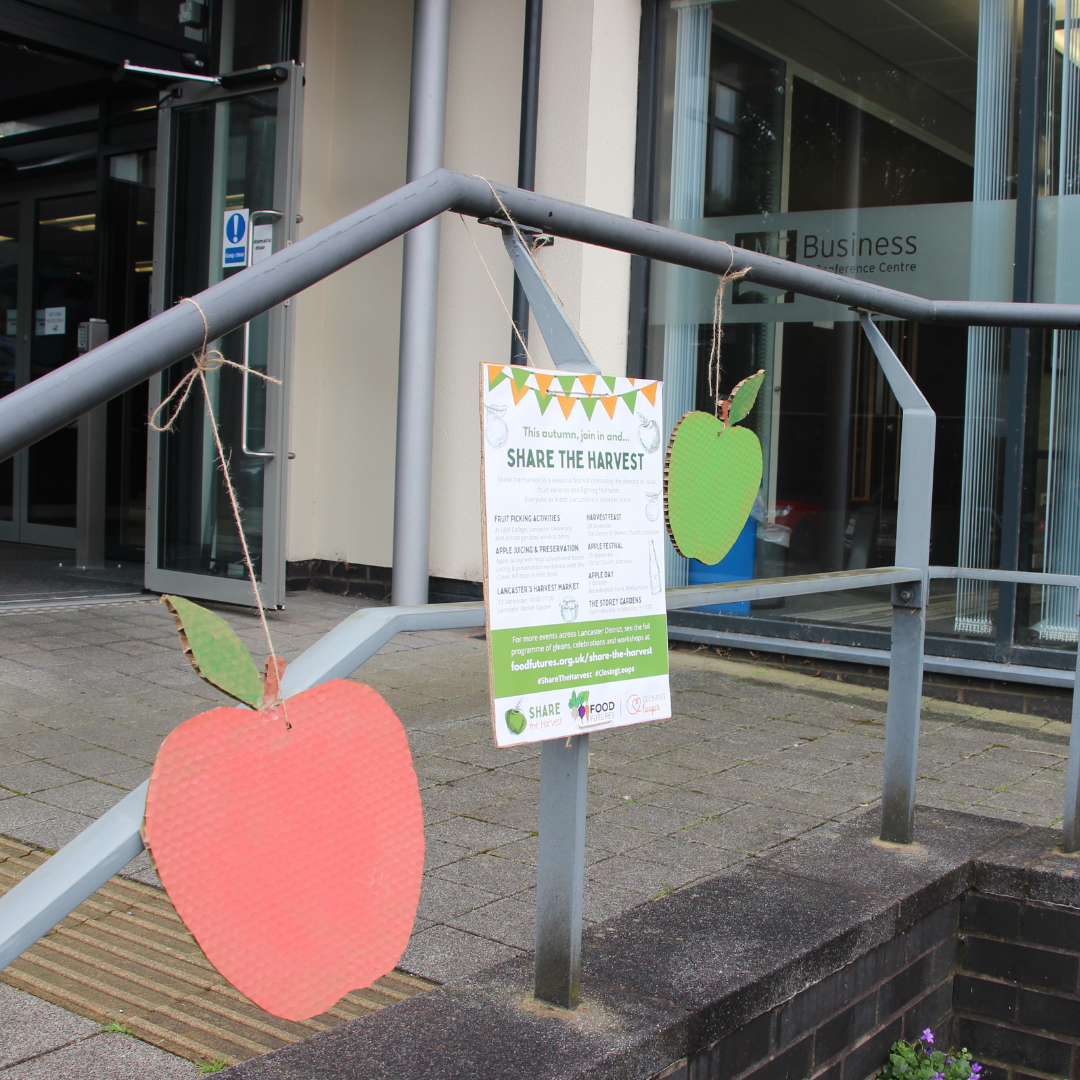
Lancaster and Morecambe College recently hosted a delightful autumn event as part of the district-wide Share the Harvest festival. Activities included apple picking, pressing and tasting fresh apple juice, cooking demos in the catering department, weeding the garden beds and composting weeds and apple pulp.
After a somewhat foggy early morning, the sky cleared up rapidly and the air was filled with the fresh, earthy scent of autumn. A group of students got a chance to escape the classrooms and spend a day out in lovely sunny weather.
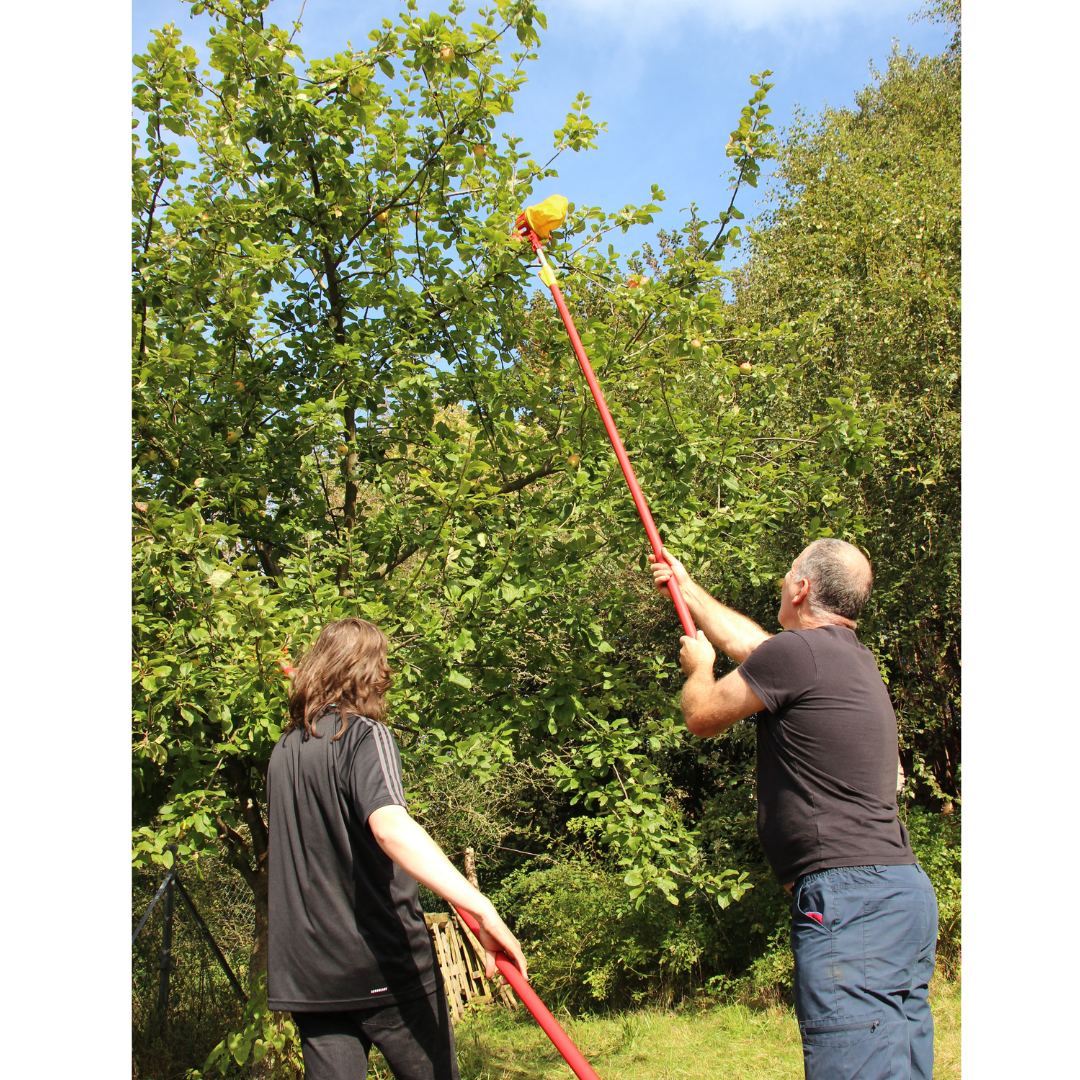
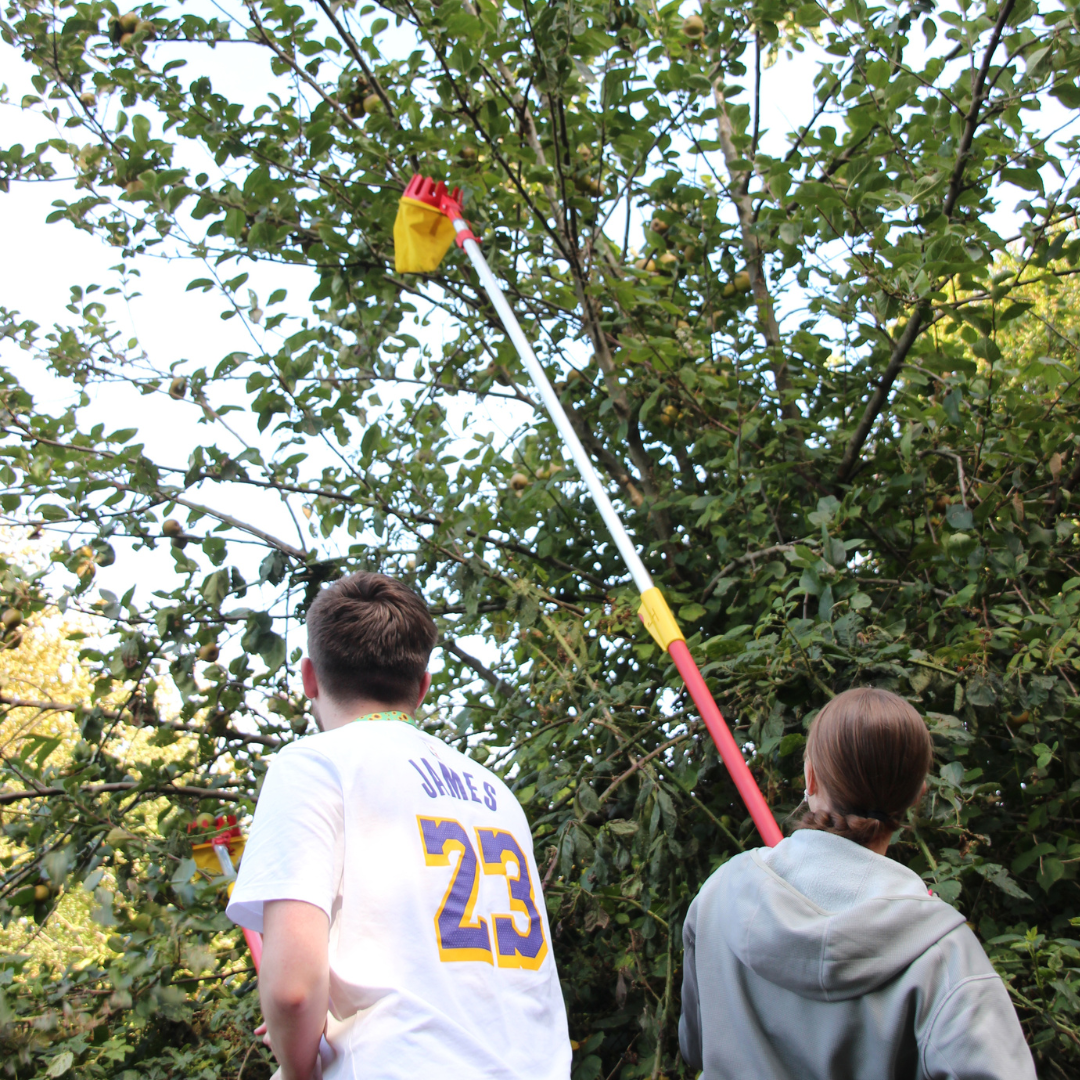
The students were joined by Senior Lecturer in Hospitality and Catering Adrian Law, as well as members of the Closing Loops project team and a group of volunteers. Closing Loops Gleaning Coordinator Jay Godden gave the students and volunteers a safety briefing and then equipped them with extendable apple pickers so they could reach even the higher up fruit. Once the first few crates were filled, it was time for the students to try their hands at pressing fresh juice with a mobile apple press.
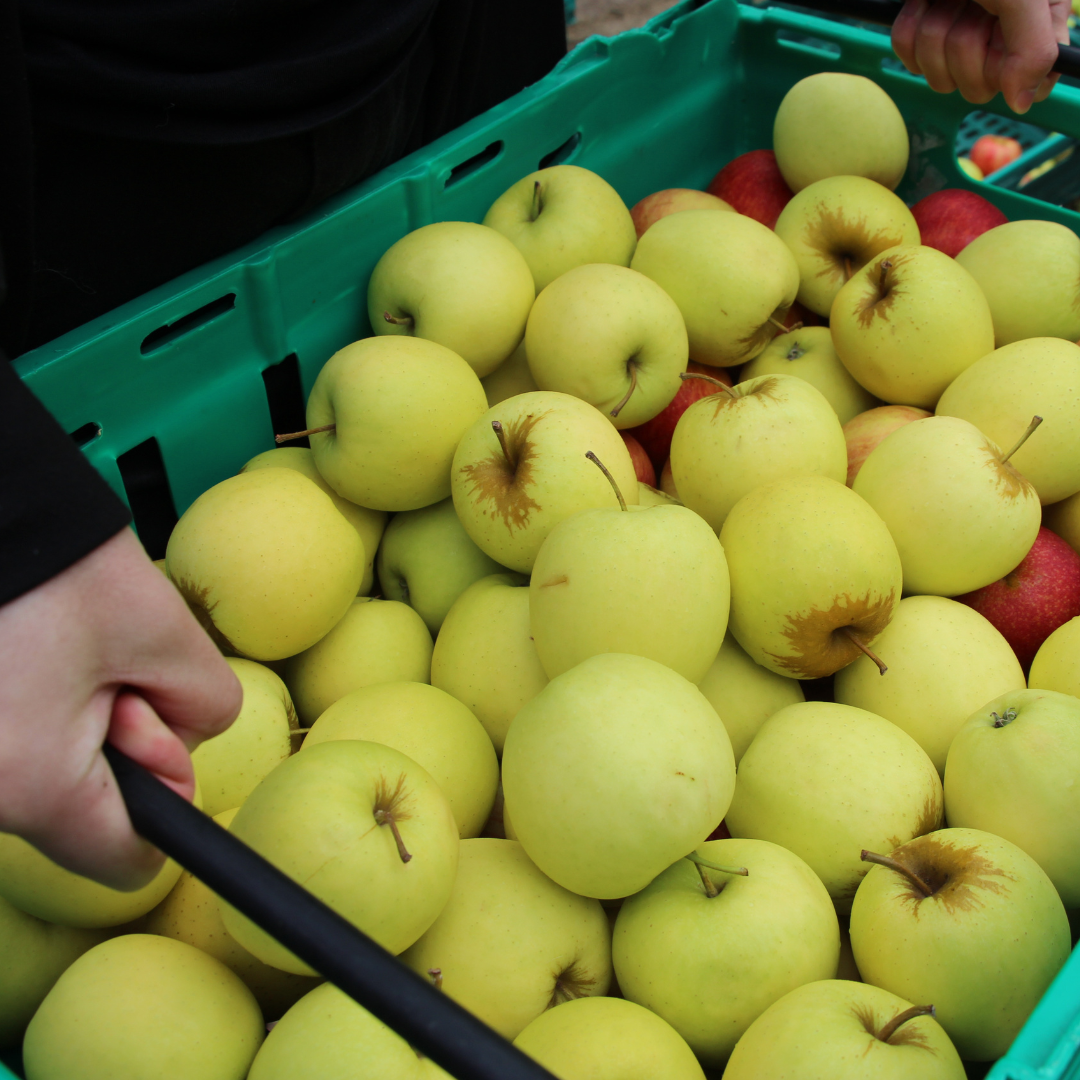
Apples were put into separate crates depending on the variety. Ben Ruth, who owns the apple press and very kindly brought it along for the event, explained why: “You can press juice from any apples and even other fruit, but it tastes best when you get a mix of cooking and eating apples.”
The fresh apple juice was a great hit – sweet, tangy, and undeniably fresh, offering a true taste of autumn.
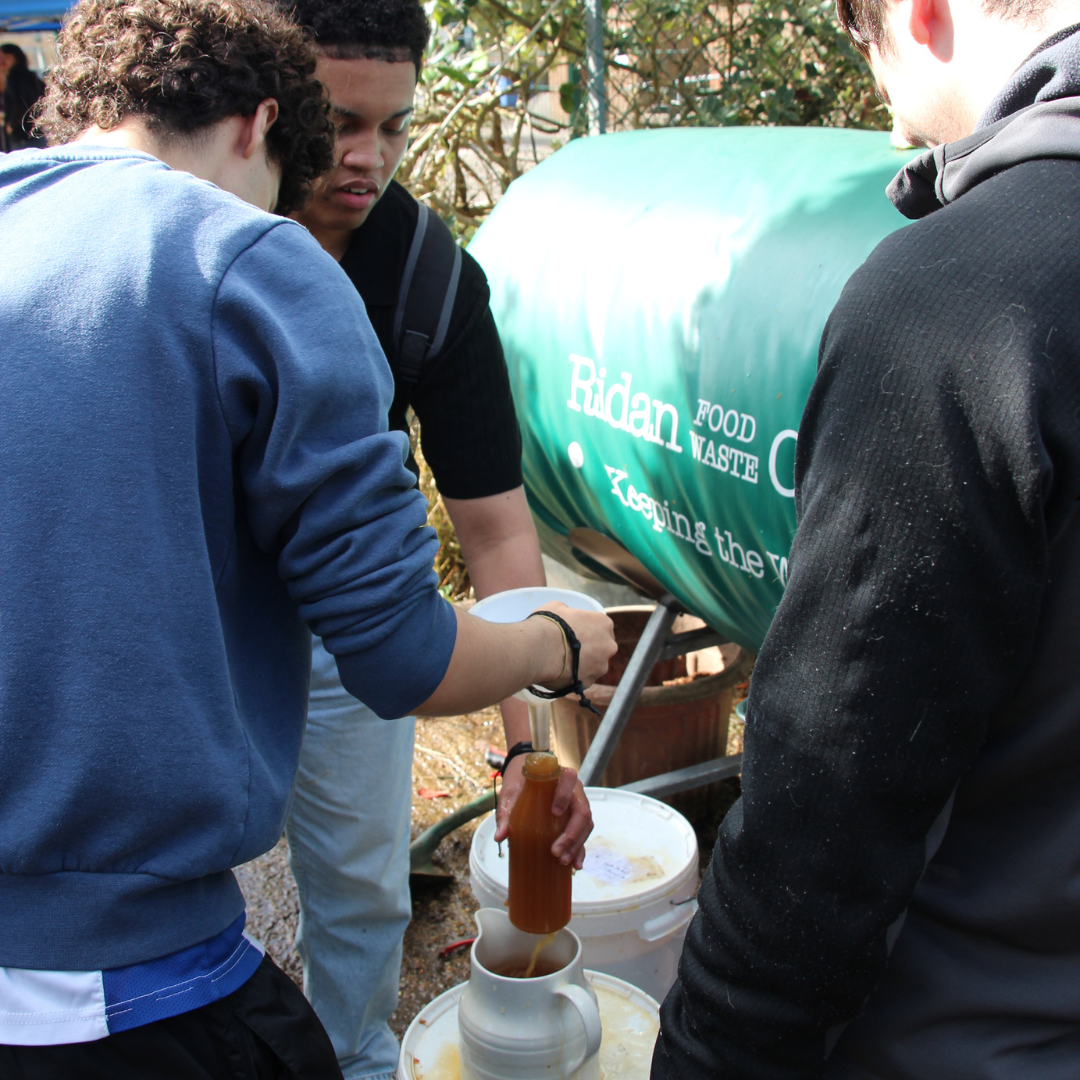
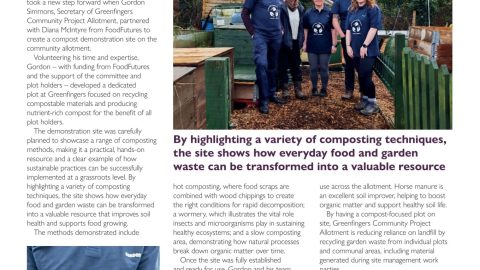
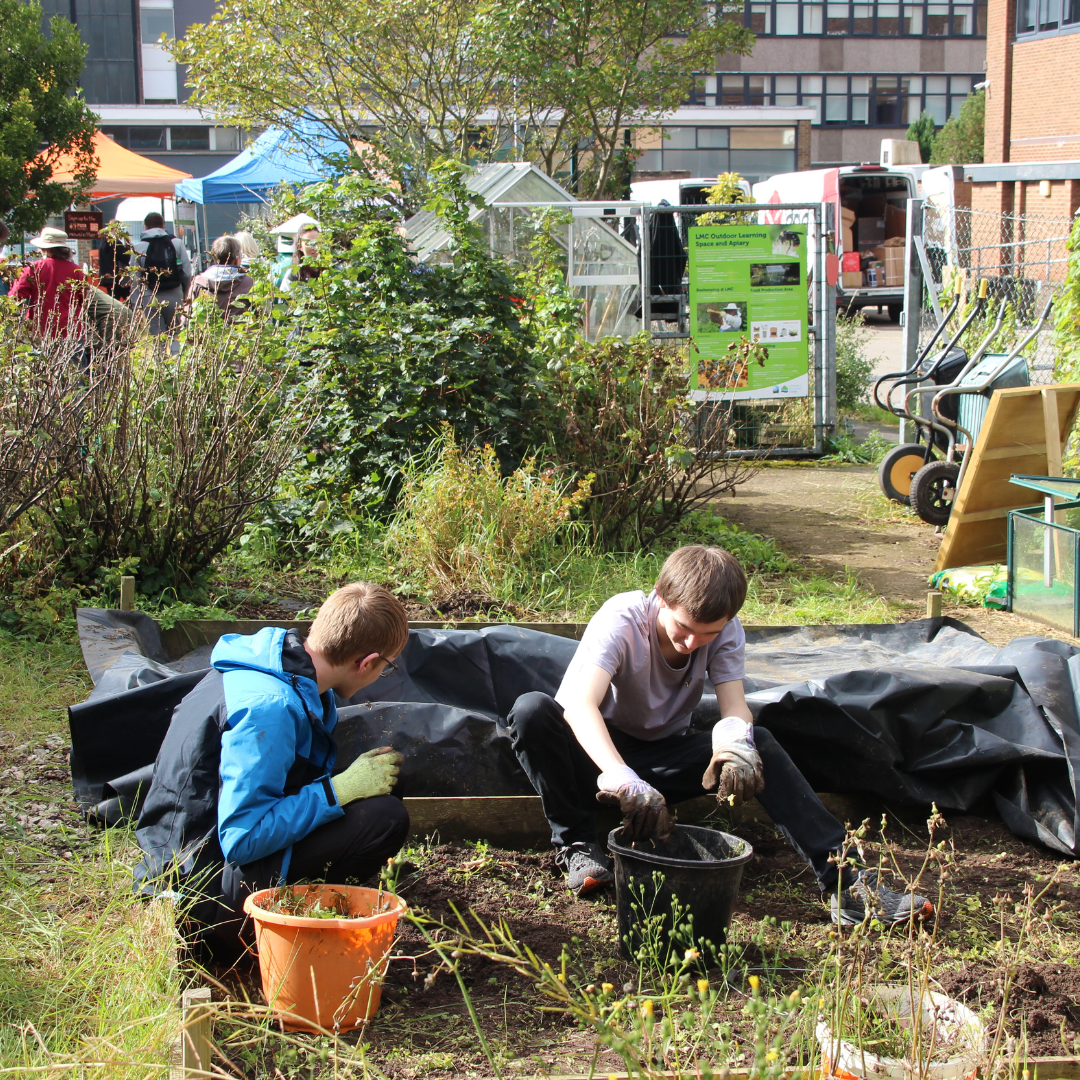
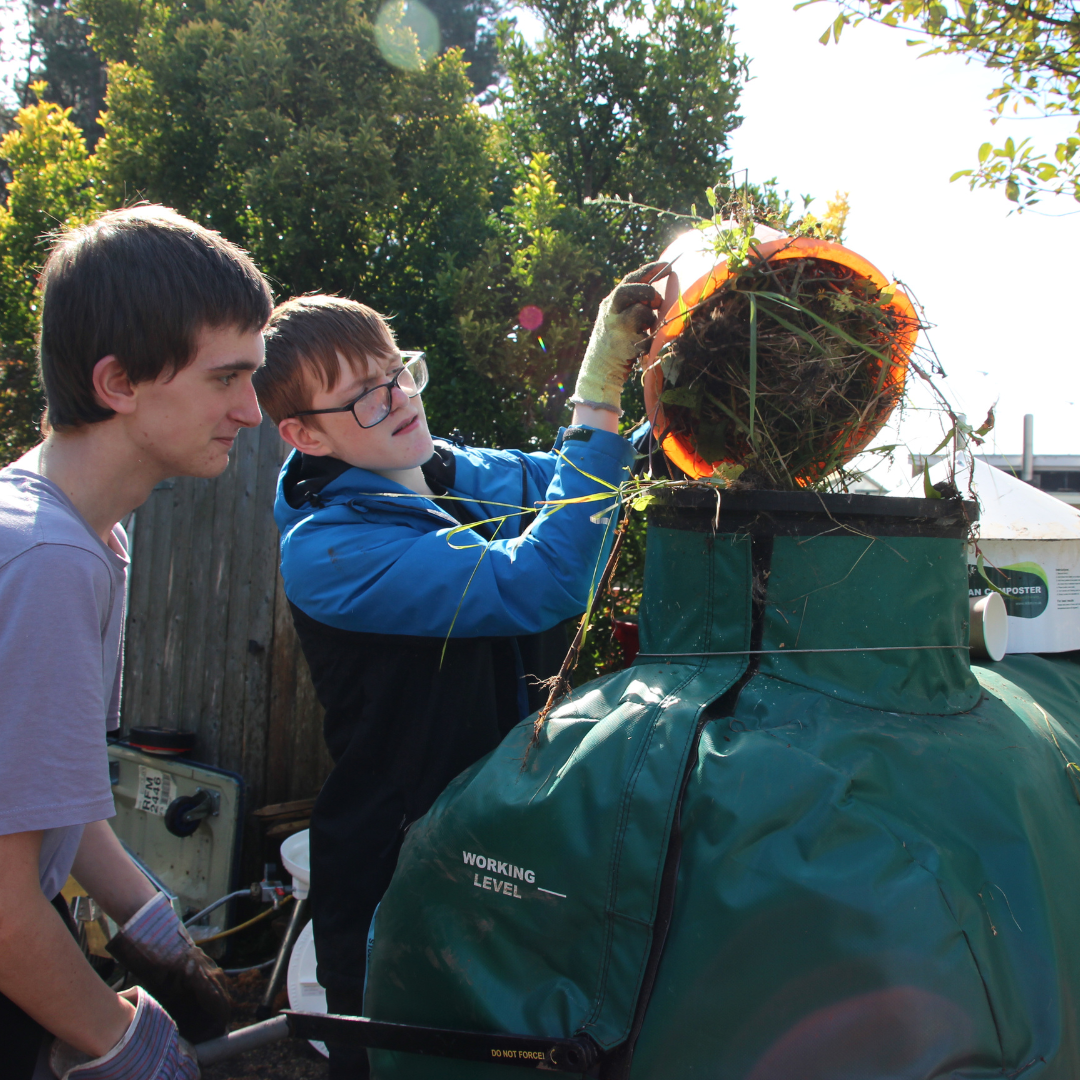
Meanwhile in another part of the college’s garden, Closing Loops Community Composting Coordinator Diana and a few enthusiastic students and volunteers were busy weeding some overgrown vegetable beds. The weeds then went into the Ridan composter, which is a medium-scale hot composting method that gets hot enough to kill any weed seeds. It is a closed container raised off the ground, so it is also rodent-proof and unlike home compost piles can be used for cooked food waste.
The composter is just one of many efforts the college has been making to make their operations more sustainable, and the day of outdoor activities was a great opportunity to combine hands-on learning and community engagement.
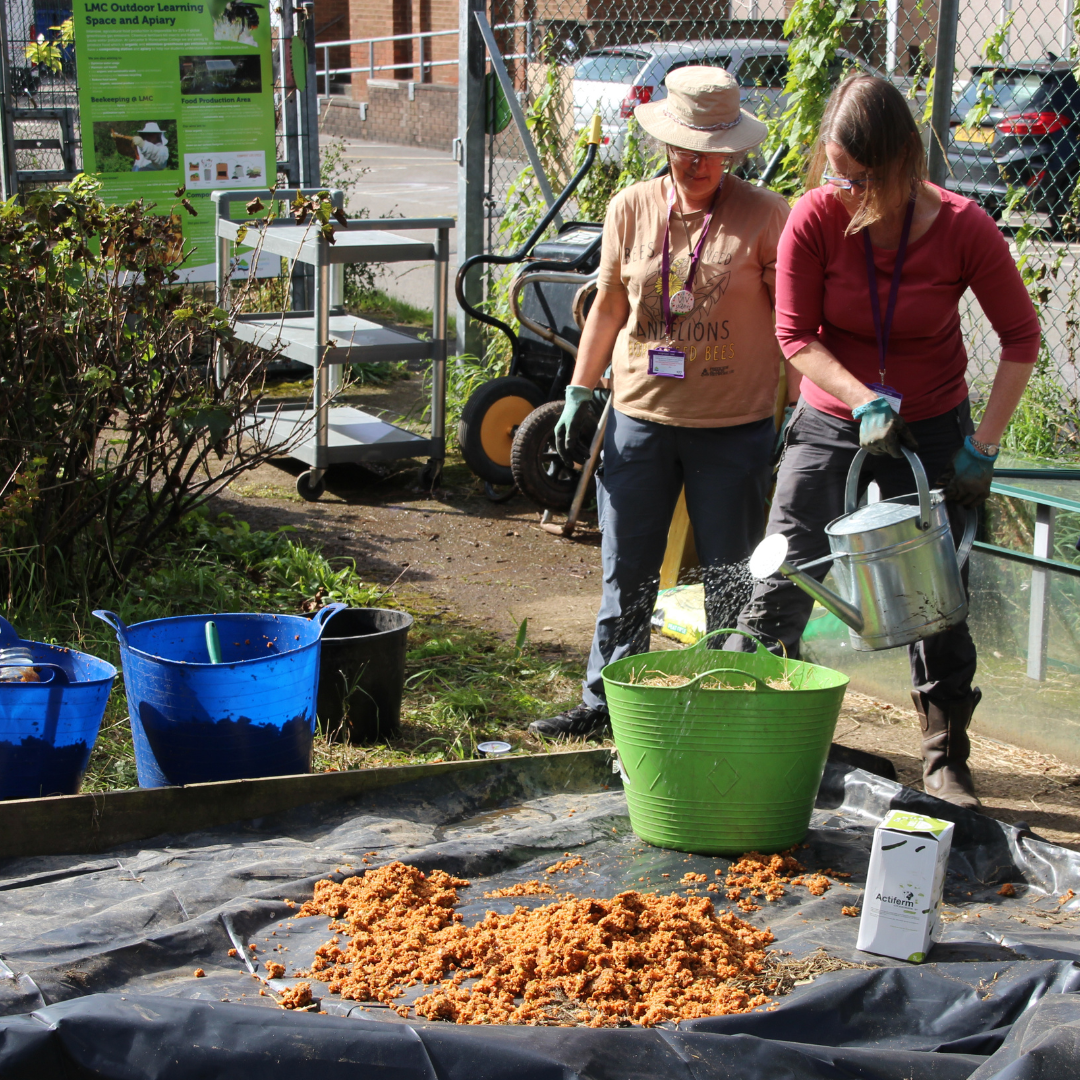
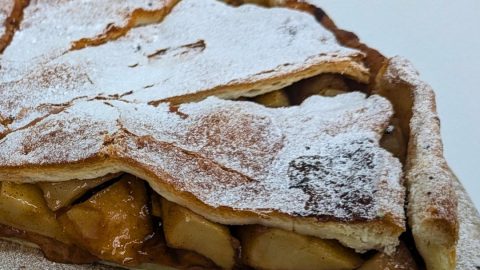
As a welcome break, lunch and apple pie were enjoyed by all before it was time to do another round of apple picking, clean up the juicing equipment and bottle some juice to take home. On the composting side of the garden, the apple pulp that was left over from juicing was wrapped up in a sheet along with some beneficial microorganisms that would turn it into a rich natural fertiliser, through a composting process known as bokashi.
Students were shown the importance of composting as part of a sustainable, closed loop system, learning how food waste can be transformed into nutrient-rich compost for gardens. “Composting is a simple but powerful way to transform waste into a valuable resource,” explained Diana. “Today, we’ve turned apples into juice, and now, we’re making sure nothing goes to waste by turning the remains into compost. It’s all about closing the loop and making the most of what nature provides.”