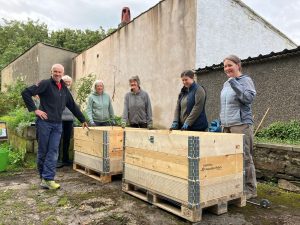
How can neighbourhoods get together to reduce waste and create living compost?
The Closing Loops project has facilitated the launch of nine community composting demonstration sites in North Lancashire.
Community composting has many benefits: It brings people together to create stronger, more resilient neighbourhoods by turning food waste into a valuable resource for local soil and green spaces. Through shared composting projects, people build connections with one another, increase awareness of the impact of food waste, and develop a deeper relationship with the soil and natural cycles that support life.
These initiatives help create local composting infrastructure while giving communities the skills and knowledge needed to compost confidently and effectively. They are taking direct climate action locally by producing living compost that supports healthy soils, contributes to biodiversity, food growing and climate resilience.
This How To Guide shares the key learnings and can be used as a guide for others to set up a collaborative composting project on their own.