Healthy Food & Environment Working Group
Our vision of a sustainable food system is one that is democratic, predominantly plant-based, local and seasonal, and which uses organic growing methods. The food is fresh, less processed and everyone involved in the production of the food is paid a decent wage. Animal welfare and rights are respected and power is distributed throughout the food supply chain.
This working group exists to support work towards this vision. It seeks to facilitate strategy and collaborative projects that cultivate healthy soils, humans, communities and ecosystems, recognising that all are connected.
This group currently meets every two months.
This group’s two year priorities:
Creating a zero waste district
- Continue to develop a community composting network for North Lancashire including composting demonstration sites, compost champions network and training events.
- Share and promote the small and medium enterprise composting feasibility work and support the set up of schemes which grow from this.
- Continue to develop a gleaning network in order to roll out a North Lancashire wide approach to re-distributing and to increasing the flow of surplus food into our existing food redistribution system; reducing farm and business level food waste. This includes: running gleaning trips, developing routes for local business, allotments and community gardens to supply surplus and adding value to surplus food
- Support the ‘Share the Harvest’ festival to celebrate the annual fruit harvest and redistribute seasonal gluts.
- Map and promote zero-waste initiatives through a ‘Don’t Ditch It’ directory
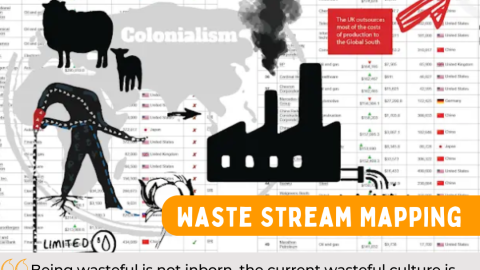
- Build on waste stream mapping work with events, conversations and workshops around a zero-waste and regenerative economy
- Work with the Good Food Manifesto network and REconomy steering group to develop training focussed on SME, charity and social enterprises around designing ways of working that embed planetary and human health at the centre of decisions.
- Campaign to remove plastic from the food chain and ensure single-use plastic ban is enforced
- Deepen relationships with Lancaster District Greenspaces, Ref/Use lab, Lancaster Climate Emergency Centre and other relevant local organisations
Working towards agroecology and diverse wildlife habitats across the district
- Run ‘Growing Food and Community’ training in 2025 and 2027. Support initiatives in between training and access to Pots of Possibility funding
- Support and collaborate with the ‘peat free’ campaign locally
- Seek funding for an agroecological futures in North Lancashire coordinator to take forward work around the ‘Farming for Change’ model and create a movement for agroecology.
- Collaborate with council planning to ensure integration of multi-functional green spaces for food growing, nature and people.
- Contribute to the Lancaster District Full Local Plan Review around food growing, multifunctional green spaces, and healthy soils.
- Work with planning and property officers to create long-term protections for land and infrastructure of food systems’ value
- Integrate pollinator strategy into council grassland management
- Collaborate with Lancaster City Council to develop training courses for developers and others
Social prescribing
- Support and promote the local directory of services including linking in more food and growing projects
- Develop additional guidance on what makes a good space for social prescribing and how to create multifunctional spaces (for instance for biodiversity, social use)
- Develop advice for link workers and participants around what is involved with volunteering at green spaces to dispel myths and fears
Promoting a local and seasonal diet
- Continue to work with our local growers, food producers and chefs to form a network that co-creates the ‘Tastes of North Lancashire’ menu – one that is healthy for people and planet whilst supporting agroecological producers.
- Collaborate with Lancaster District Food Justice Partnership to make local, healthy and sustainable produce more accessible to those in the food support network.
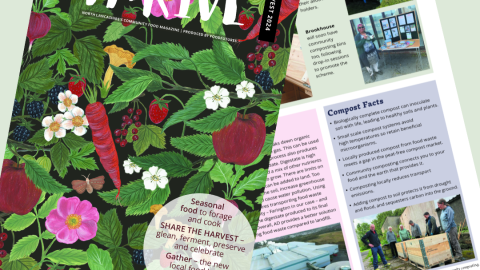
- Develop case studies that highlight good practice around sustainable and healthy food cultures – feeding into THRIVE magazine, food columns, blogs, videos and campaigns
- Promote local, seasonal and sustainably produced food – through training, skill share, community meals, cooking demos and stalls.
- Support local health festivals to coordinate a food strand of events, skill shares and community conversations
Enable, promote or host training and skill share events around:
- Range of composting workshops, making and using biochar, using bio-fertilisers, a valentines themed ‘Love your Soils’, Eat your pumpkin
- Repair and reuse workshops, how to create less waste, how to have a sustainable celebrations
- Training and advice for growers and community green spaces (including allotments) to cover promoting biodiversity, avoiding invasive species, managing land for diverse habitats, making decisions and managing collectively, bee-keeping, water saving practices and how to adapt your growing to climate change, seed-saving, cultivating healthy soils, training courses for developers
- Shifting towards agroecological production; natural flood management; cultivating biodiversity (adapted for different locations from your backyard to our local fells), agroforestry, agroecological transitions and food sovereignty
- Cooking seasonally from scratch; reducing food waste; preserving and fermenting, energy efficient cooking techniques, growing nutrient dense food, cooking healthy food on a budget, foraging, ‘from soil health to healthy food’, plants as medicine, ‘Love your Weeds (and eat them)’
Enable, promote or host community and climate conversations
- Community conversations around eating less and better meat, moving beyond surplus food, what does zero-waste really mean, agroecological futures, food waste solutions
- Carbon conversations to support groups and communities to take action on climate change. Groups to work with include teachers, councillors, Eco Church network, Good Food Manifesto group, charities

Heathly Food & Environment Resources
Case Studies
THRIVE is North Lancashire’s community food magazine, publ...
Since November 2023, Closing Loops has hosted three communit...
How can neighbourhoods get together to reduce waste and crea...
Share the Harvest is a campaign that encourages everyone in ...
Could business food waste in North Lancashire district be co...
Growing Food & Community Lottery Funded Training FoodFut...